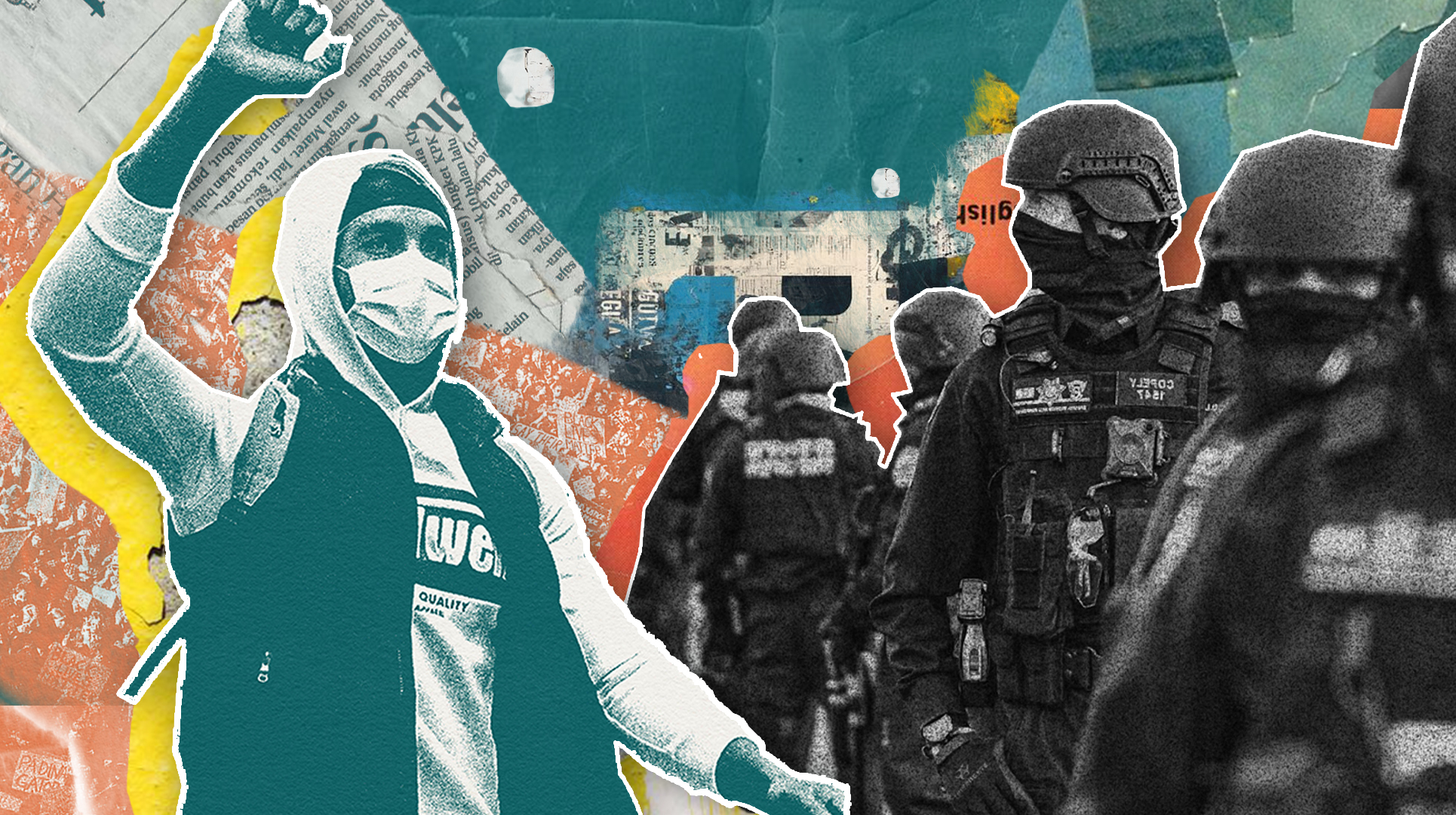
Protest has been a catalyst for change throughout history. But in Europe and across the world, many governments are cracking down on it.
This clampdown, says Montserrat Romero, a campaigner at Civitates’ grantee partner Amnesty International Austria, marks an “an early sign of democratic decline. And a clear one that governments don’t really care about human rights.”
Amnesty’s alarm at this development prompted it to launch its global Protect the Protest campaign three years ago. “In Europe, the right of peaceful assembly is increasingly coming under attack,” the organisation noted in a report last year, “with state authorities stigmatising, impeding, deterring, punishing and cracking down on those organising and participating in peaceful protests.”
Article 19 quantified this disturbing trend in its recent Global Expression Report, finding that in the last decade, freedom of peaceful assembly declined in 16 countries in Europe and Asia.
This pattern is not only unfolding in countries where the drift towards authoritarianism is unmistakeable, but in established democracies. Among the countries recently criticised for eroding the right to protest in one way or another, are Spain, Germany, the United Kingdom, Belgium, the Netherlands and France.
In Italy, for example, new legislation restricting the right to peaceful protest includes the so–called ‘eco-vandals’ law, which targets climate activists, and the Security Decree.
The latter was approved by the Italian Senate in June, and introduces heavier penalties for protest-related offences “including property damage and disruptive sit-ins” while increasing the powers of law enforcement.
Michael O’Flaherty, the European Commissioner for Human Rights, expressed deep concern about the law, noting that peaceful assembly and freedom of expression “are a cornerstone of democratic society”.
Silencing dissent
“The repression of demonstrations goes hand in hand with the silencing of dissenting voices,” says Mathilde Nilsson, of Civitates’ French grantee partner, Ligue des droits de l’Homme (LDH).
In France, she sees the authorities using a three-pronged strategy: “There’s administrative bans on protests, and a disproportionate use of force during demonstrations. At the same time, subsidies for associations deemed ‘too political’ are being reduced or even withdrawn. The actions of these associations, particularly those engaged on environmental issues, Palestine, or the rights of exiled persons, are also increasingly being criminalised. Taken together, these measures reflect a structural trend toward restricting civic space and marginalising counter-powers.”
Such tactics are partly aimed at deterring people from attending protests, she argues: “Demonstrations are now subject to constant monitoring, including aerial surveillance, which has a significant chilling effect: fearing identification and potential reprisals, whether professional or personal, many people choose to forgo exercising their right to protest.”
Yet while the picture is bleak, it’s far from hopeless: in the face of growing pressure, European civil society is showing remarkable resilience.
“It continues to mobilise, provide mutual support, and build networks to resist being silenced. This ability to organise and show solidarity is civil society’s greatest strength, and is what gives us hope,” Nilsson says.
This ability to organise and show solidarity is civil society’s greatest strength, and is what gives us hope
Strength in solidarity
A stunning display of this solidarity occurred on June 28, when around 350,000 people attended Budapest Pride, marching through the Hungarian capital despite the threat of prosecution, and in defiance of the government’s ban on the event.
The saga began on March 18, when Hungary adopted a law banning Pride marches by the LGBTQ+ community. It was the latest salvo in Prime Minister Viktor Orbán’s government’s efforts to restrict LGBTQ+ rights in the name of ‘child protection’ – as well as part of a wider strategy to divide and distract, says the LGBTQ human rights defender and President of Budapest Pride, Viktória Radványi.
“It was incredibly hard organising the event because of the uncertainty,” says Radványi, a member of the Budapest Pride team since 2015. “Ninety-five per cent of corporate sponsors just abandoned us.” But the support of other civil society organisations, not just in Hungary but internationally, proved crucial. “The relationships we built in the past 20 years were really important,” she says.
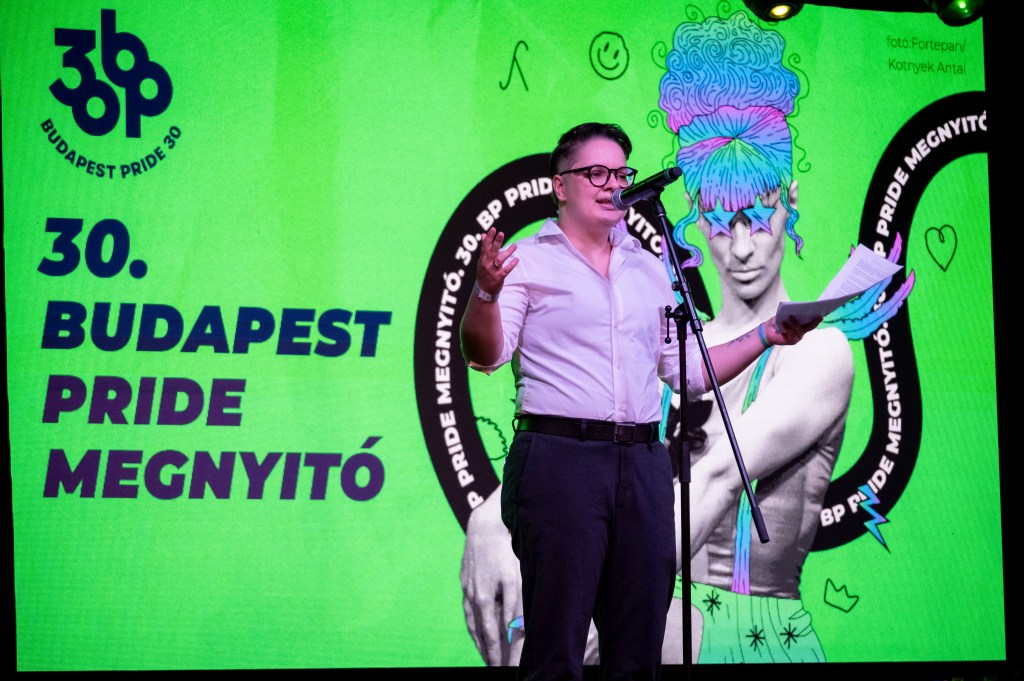
To try to circumvent the government ban, Budapest’s liberal mayor, Gergely Karacsony, recast it as a municipal event. But the threat of fines and jail time still hung over organisers and participants. In the end, it exceeded all expectations, attracting the biggest crowd in Budapest Pride’s 30 year history.
People were really kind and attentive to one another. The way they interacted reflected our values. This was the biggest mass protest we’ve had [in Hungary] for 35 years.
“Two hours before the march we realised that something big was happening. Usually at that time there are just a few people around the crowd, but tens of thousands of people had gathered,” Radványi recalls.
The march itself was “super peaceful, super colourful… People were really kind and attentive to one another. The way they interacted reflected our values. This was the biggest mass protest we’ve had [in Hungary] for 35 years. I think what resonated with people was the idea that if the government can do this to one minority, they can do it to anybody. It was very inspiring.”
Among the many international NGOs marching in solidarity were delegations from Amnesty International, which included Montserrat Romero.
“Being together and marching alongside other movements, building people power with many other civic society organisations, was incredible for me as a campaigner,” she says. “It was amazing to witness and be part of.”
The fundamental importance of the right to protest, she believes, is something which needs to be more widely embraced, and even taught in schools.
“People tend to see protest as a threat. The general perception is that protestors are disruptive. In fact, they are people who care about society; people who care not only about their own rights, but other people’s.”