In 2026, two cases revealed how civic space is eroding, and those defending digital freedom and combating disinformation are on the frontline.
RightsCon, the world’s leading summit on human rights and technology, was due to be held in Lusaka, Zambia on May 5-8. Civil society, technologists, academics and policymakers were set to tackle some of the digital age’s most pressing issues: AI, surveillance, the militarisation of tech, disinformation, and online hate, among them.
But just days before the summit was going to open, and with more than 3,000 delegates about to arrive in Lusaka, the Zambian government unilaterally postponed the event because it did not align with “national values”. The decision, according to local reports, was made after Chinese diplomats pressured the Zambian government, objecting to the presence of Taiwanese civil society delegates at the conference.
In October, another attempt by a foreign power to intervene in a civil society gathering occurred.
On the eve of #Disinfo2026 conference in Vilnius, Lithuania, convened by EU DisinfoLab and attended by 650 civil society, media, government, and tech company participants among others, the United States government successfully pressured multiple sponsors to remove their logos from the event.
The reason behind this interference? According to The Guardian and Politico, the US State Department objected to the presence in the conference’s agenda of a panel entitled ‘The US as a FIMI [Foreign Information Manipulation and Interference] threat: acknowledge, adapt, push back’.
The spaces for civil society, policymakers and industry to meet and discuss on AI, disinformation, and online hate are closing. These cases fit a wider pattern of geopolitical interference, including pressure on the EU to reverse its digital regulations.
Transnational repression
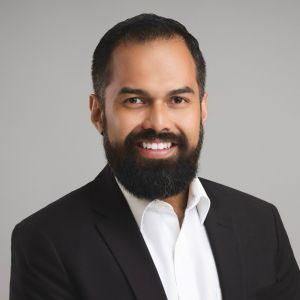
Alejandro Mayoral Baños is Co-Executive Director of Access Now, an organisation that defends and extends the digital rights of people and communities at risk and organises RightsCon. (Civitates have supported Access Now Europe in the past.)
A week before the event was meant to start the organiser received indications that China was pressuring the Zambian government to postpone – i.e. effectively cancel – the conference.
“We worked with several partners to try to reverse the decision. But in the end we couldn’t compromise on our values and risk the safety of the participants travelling to Lusaka,” he says.
For many years, civil society members have alerted Access Now to transnational repression though the organisation’s Digital Security Helpline, but, says Mayoral Baños: “We never saw it on that scale before… [China’s interference] is a very clear indication that national states are investing in transnational repression and trying to manipulate the civic space.”
Mayoral Baños adds that the case shows
how difficult it is now to have these types of conversations around human rights and digital technologies in the current landscape.

Courage
This sentiment is echoed by Alexandre Alaphilippe, Executive Director of the independent Brussels non-profit, EU DisinfoLab, a Civitates grantee partner.
Alaphilippe recalls how four days before the #Disinfo2026 conference, EU DisinfoLab started to receive calls from some of their public supporters, who, yielding to pressure from the US State Department, said that EU DisinfoLab would need to change the title on its panel on US foreign interference. Eventually, the conference took place as planned, but multiple public sponsors removed their logos at the last minute, stating that the conference’s programme would not “align with their official views” or that the programme would have changed at the last minute.
“For months, we communicated quite loudly to our community, sponsors and everybody beforehand that we would touch on these issues,” says Alaphilippe. As a civil society convenor, he notes, it would be contrary to EU DisinfoLab’s core principles to self-censor and avoid politically divisive topics. We had no reason for changing what American researchers coming to the conference wanted to say about the disinformation strategies surrounding the current US administration.”
“What are they [the US administration] afraid of?” he asks. “If they’re afraid of people coming to a place to have coffees and talk freely about things, it shows how much leverage we actually have, because that’s what we do on a daily basis.”
Foreign interference in #Disinfo2026 had a silver lining, says Alaphilippe: it made those who took part realise that
they were resisting pressures others weren’t. In terms of community building that is super important, because it shows people that courage is not that hard to reach.
Sustaining civic space
But intensifying external pressure on their work is not the only challenge Access Now, EU DisinfoLab and other digital rights defenders face. The financial burden of organising convenings is also taking a toll.
“People are very supportive of these spaces and want to participate in the narrative,” says Mayoral Baños. “But when you’re having conversations about money and how to sustain the spaces it’s a different conversation.”
It’s important for funders and donors to realise that if they do not contribute, somebody has to: “There has to be some kind of [acceptance of] economic reality; You can’t ban all public subsidies, refuse to take any platform or corporate sponsorship, and have free tickets for everybody. Somebody has to pay. If you take corporate or public money with the right safeguards, it does not mean you sell their point of view,” says Alaphilippe.
“If they [corporations] are in the same room, they can be grilled and asked uncomfortable questions. But if you exclude people, then we only talk to ourselves. It’s super cosy, but we’re not solving the issue…
Democracy is about being uncomfortable, having different views and being able to confront them and disagree.
Read more about the erosion of civic space in Europe here.