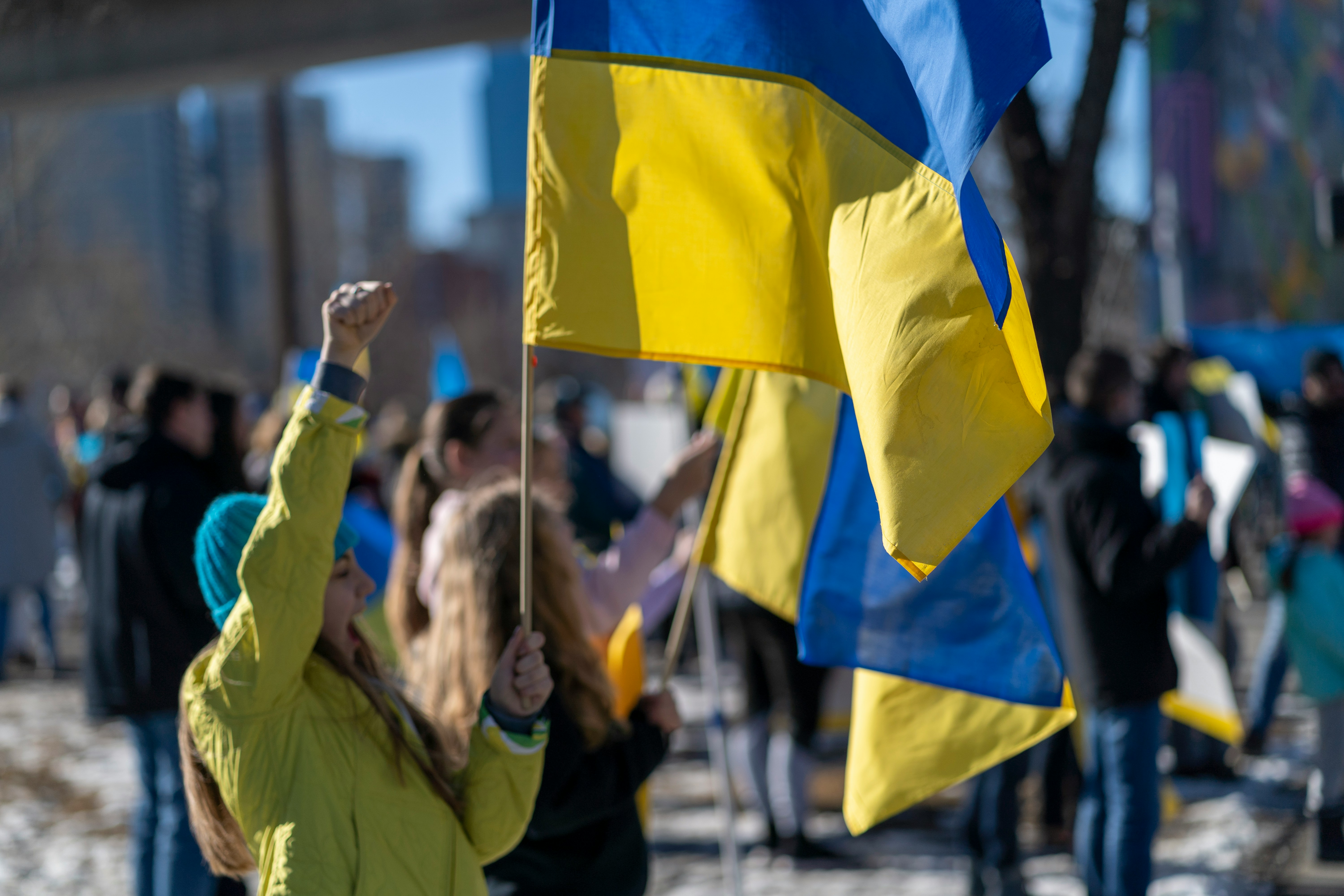
Civitates’ Ukraine Solidarity Fund: ‘A critical initiative in a time of pressing need’
Russia’s invasion of Ukraine in February 2022 – and the remorseless war it has waged there since – has created untold suffering and a vast loss of life. The war has also seen millions of Ukrainians seek refuge in the EU, reshaped Europe’s civic space, and been fought against a backdrop of online Russian disinformation, cyberattacks, internet shutdowns and censorship.
In May 2022, three months after Russia’s attack, Civitates launched the Ukraine Solidarity Fund: a rapid-response to the urgent needs the war generated. This time-bound fund had a €320,000 budget, which was used to assist 11 European civil society organisations working in solidarity with Ukraine. While none of these organisations were operating from within Ukraine, they all were affected by and ready to address the consequences of the war.
The Fund concluded at the end of 2024.
As a grantmaker committed to constant improvement, we commissioned an independent review to assess the Fund’s impact and effectiveness. What lessons can we learn? And what conditions create a successful ‘emergency’ or rapid response fund in times of crisis?
Unique value
The grantees interviewed for the review widely acknowledged the Fund’s “unique value”; that its “speed, flexibility and streamlined processes” were critical in their ability to respond effectively to the challenges they faced immediately after the invasion; and that the fund “filled key gaps that other donors couldn’t address at that time, enabling organisations to mobilise quickly and without extensive bureaucratic requirements”.
What’s more, for some grantees the Fund helped them establish credibility and capacity in their work, and was a catalyst for other funding from the likes of the UN High Commissioner for Refugees (UNHCR) and the National Endowment for Democracy (NED). The Fund also provided support for marginalized communities who are largely overlooked in traditional emergency aid efforts.
Despite these positives – and the grantees’ tangible achievements, which the review highlights – the Fund had limitations. This is not surprising, given the modest size of the grants, the limited scope of some projects, and that the Fund was initiated as a rapid response, rather than with a long-term purpose. The review also found that Civitates’ small team found it challenging to provide deeper coordination and continued field analysis and support during the Fund’s operation.
Inspiring results
Among the key lessons from the Ukraine Solidarity Fund is the importance of swift, collective donor action, that a flexible approach to funding can pay dividends, and that Civitates’ niche focus on European civil society, rather than direct humanitarian aid “proved effective and underscored its unique role in supporting democratic resilience in Europe… The Fund demonstrated that even small, well-targeted grants can yield significant results.”
The review found that while Civitates is not a rapid-response funder by design, its unique position as the European Democracy Fund means it can continue to address acute crises in civic space.
In short, the review concluded that the Fund “may not have solved the large, complex challenges faced, but it enabled critical initiatives that addressed pressing needs and led to inspiring results.”
The war in Ukraine has just passed its third anniversary and Russia’s disinformation campaigns show no sign of abating. Unfortunately, sustaining the Ukraine Solidarity Fund – or emergency funding of any kind – is not currently possible given our multi-year financial commitment to existing grantee partners across Europe. Civitates will nevertheless continue to leverage additional funding and mobilise public and private donors for a collective response when attacks on democracy, the rule of law and civic space arise any time in Europe.
Read the report here.