In the midst of last year’s Polish Presidential election, YouTube influencer Krzysztof Stanowski’s channel attracted 175.5 million views in a single month, and he was considered Poland’s main opinion leader. Stanowski was also a candidate in the election.
In the Czech Republic, the far-right SPD party has recruited social media influencers to its electoral lists. And in Hungary – as elsewhere – influencers play significant roles in both supporting and opposing the government.
These are all examples of the vast, burgeoning impact unregulated content creators are having on democracy, which is laid bare in a recent report by Polish nonprofit and Civitates’ grantee partner, CEE Digital Democracy Watch.
“Citizens of all ages now get news, opinion, and personal updates through social feeds, where attention is driven by engagement metrics and virality, not editorial curation,” the report, Like, Share, Vote – How do political influencers affect elections, says. The result is that “platforms are financially rewarding misinformation at rates approaching legitimate content, becoming a direct subsidy for democratic dysfunction.”
The report captures CEE Digital Democracy’s Watch’s ethos: identify an evolving digital threat to democracy, and propose concrete solutions to it. In this case, solutions include increasing transparency around money flows, and harmonising the definition of influencers.
A bridge to Brussels
CEE Digital Democracy Watch was founded in 2024 by lawyer and film school graduate Jakub Szymik, a specialist in EU and digital policy who didn’t want to follow the traditional corporate legal career path.
The Warsaw-based organisation fills a crucial gap: offering a bridge between Poland and Brussels on vital issues concerning the future of tech and democracy – advocating for solutions, monitoring elections, and building networks.
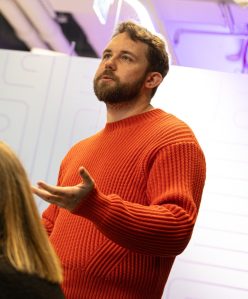
“In Poland, and in the region, there was little to no discussion on how the digital landscape is changing how politics works, how human rights works, how impactful this change in communication is,” says Szymik.
These are among the defining issues of our time, and Szymik invested his own money in founding CEE Digital Democracy Watch to help tackle them.
“We started at a time when funding for NGOs is being rolled back, so we’re very happy about how we’re developing. There’s big interest in the work we’re doing. We’re now able to keep a team of four people and have problems I wouldn’t have thought of before, such as needing an admin and finance person, a lawyer, and a governance structure.”
Ahead of the curve
A key factor driving Szymik’s decision to found CEE Digital Democracy Watch was the “massive disinformation waves” emanating from Russia: “This is an urgent issue which we see as part of our mission, and which underlines how we plan our work.”
One of the organisation’s first projects was to monitor online election spending for European Parliament elections in Central and Eastern Europe. At present their work is mostly focused on Poland, and they are building relations with NGOs doing similar work in the region and trying to break some of the ceilings in European institutions.
“This is a space that develops way faster than any state responses or policy solutions. I feel it’s our job to be ahead of the curve. We try to not really get enmeshed in the very detailed legal disputes around the issues, but to be more on the front line: trend watching to see how the new tools are being used and misused to sway democracy one way or another,” Szymik says.
Tensions
The battles around tech and democracy are being fought on different levels, Szymik observes, including national, EU, and global, with big platforms unwilling to yield on having “the same products for all their audiences” wherever they are. “There are so many actors in the conversation and tensions on those very different levels”, he says.
The geopolitical tensions between the EU and the US administration over the former’s tech regulations are perhaps the most prominent example. These same divisions are playing out on a smaller scale in Poland.
The country’s President, Karol Nawrocki is holding up implementing the Digital Services Act (DSA), and appointing a Digital Services Coordinator, arguing that the law is Orwellian.
Meanwhile, the Deputy Prime Minister and Digital Affairs Minister Krzysztof Gawkowski accused Nawrocki of undermining online safety and siding with big tech.
This is the challenging, complex terrain that Szymik and his colleagues at CEE Digital Democracy Watch are navigating. Yet it is one they have already shown they are well-equipped to thrive in.