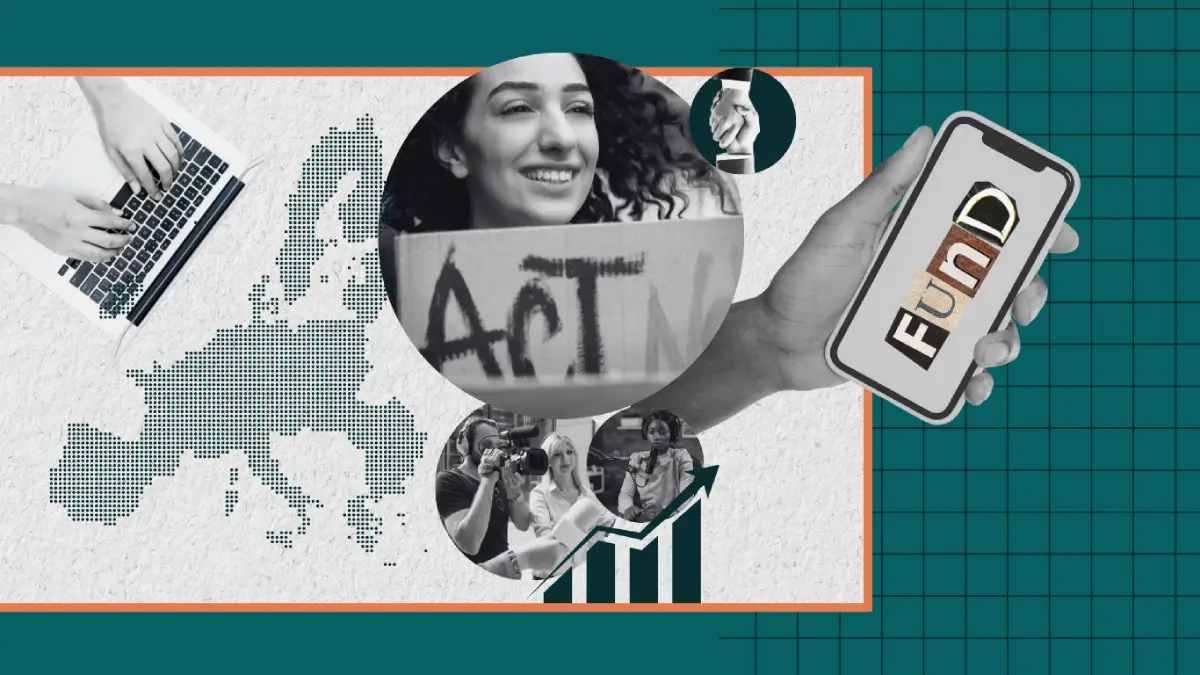
The new EEA Civil Society Fund allocates more than €300 million to strengthen democracy, human rights and the rule of law across Europe, just when democratic backsliding is growing and civil society organisations are facing acute pressure in many places.
Samuel Sigere: This new fund builds on the long standing support of Iceland, Lichtenstein, and Norway for strengthening civil society. What was the motivation behind raising the fund to an unprecedented level: €326 million in total?
Anna Striethorst: Democratic backsliding and shrinking civic space is having a clear impact in many of the countries where we work.
Human rights organisations are under huge pressure, especially organisations protecting the rights of minorities. That is why our donors have decided to increase the funding by over 50% and shift it towards fostering democracy, human rights and the rule of law.
In the future, civil society will have even more means to inform political decisions and make their own organisations strong and more resilient.
Like many Civitates members, the EEA and Norway Grants are also concerned about the future of independent media and informed public debate in Europe. So the fund will step up support for information integrity, media pluralism, and media literacy.

Samuel: What will stay the same and what will change with the programme’s new phase?
Anna: There is a lot of continuity, but we are also expanding or redirecting some areas. The support for minorities and marginalised communities for example will continue. In the past we have focused strongly on social inclusion, but this will now move more towards social justice and equality, with work on anti-discrimination, participation, and political empowerment.
Some of the support will become more explicit, too. For instance, the EEA and Norway Grants have always supported gender equality, following the pioneer role of Norway and Iceland in that regard. This will continue, but there will be specific support for sexual and reproductive health and rights, as well the rights of LGBTIQ+ people, which are both very much under threat in today’s Europe.
Another area where we are slightly refocusing is environmental protection and climate change. Here our donors recognise the important role of climate action and climate movements and also the aspect of a just transition to a low carbon economy. This is now clearly mentioned in the areas of support.
Samuel: What type of organisations are eligible and in what countries?
Anna: Civil society organisations are eligible, and informal groups and other entities – for example municipalities – can be partners. The funds will continue to go to our so-called beneficiary states: these are in total 15 EU countries, with the largest programmes in Poland, Romania, and Bulgaria. There will also be a new transnational fund which will cover 5% of the budget. It will help enhance transnational initiatives and learning, and respond to common European challenges.
Samuel: What types of costs do the EEA and Norway Grants cover? Project costs, organisational strengthening costs?
Anna: The Grants traditionally support projects, with diverse grant sizes and with coverage of both direct and indirect costs. Now, through the Civil Society Fund, we will be reinforcing the support for organisational development and resilience. This means largely capacity building grants and opportunities for training and mentoring. But there is also a relatively new scheme for the EEA and Norway Grants as a public funder, and that is core support, institutional grants. We have been starting this in the current funding period via a pilot scheme, and it will now become a standard feature. This makes an important difference in helping organisations become more strategic, think long-term, and solidify their financial situation.
Another element that I think is really helpful are small ad-hoc action grants. These grants are disbursed via rolling calls, allowing CSOs to start an initiative at a moment when there is a crisis or sudden opportunity and not wait until a new call for proposals comes up. And in any case, the new fund will make use of simpler reporting and lump sums, which will help reduce the administrative burden.

Samuel: What are the key dates that civil society organisations interested in applying should be aware of, and where can they go for additional information?
Anna: We have just launched the tender for so-called fund operators, the civil society consortia that we work with in each country to implement the funding programmes. This tender will run until April 2025. Then the programmes will be developed, and we are expecting the first calls to come out in the second half of 2025. Organisations that are interested in applying can then find information on the websites of the Civil Society Fund in their country.
We are also going to present the fund to civil society and other stakeholders in the coming months and ask for their feedback. So we are organising stakeholder consultations in most of the beneficiary states between now and March 2025. There, people can share thoughts on what works and what doesn’t, and describe the needs and challenges they face.
Samuel: How does the new fund complement the EU’s Citizens, Equality, Rights and Values (CERV) programme?
Anna: It is highly complementary. We pretty much support the same areas, notably strengthening civil society and fundamental rights in the EU, but the EEA and Norway Grants have a narrower geographic focus: on the South East, Central Europe, and the Baltic states. We also put slightly more emphasis on providing small grants and on outreach in smaller towns and rural regions. This has been a long standing priority of the grants which we will continue.
Samuel: Why is support outside large cities important?
Anna: Democratic debate and dialogue must also reach into places where there is less established civil society for now. In some regions, the EEA and Norway Grants are the only funding source for human rights and public interest groups. Here, supporting people who want to create change in their community and have an idea how to do that can go a long way.