The media is reeling from the same pressures around the world. The old funding model is dying. Yet the need for accurate, fact-based journalism that informs people about the world we live in and holds power to account, could hardly be greater.
In Hungary, we face the same pressures as the media elsewhere – but in a more extreme form.
Since 2010, when Viktor Orbán’s government returned to power, media pluralism and independence has been under assault, and independent journalists like us face constant attacks and smears by the pro-government press and online troll factories. Reporters without Borders has called Orbán a ‘press freedom predator’. At the same time, advertising revenue for independent media has fallen dramatically, in an economic climate made even harsher by Hungary having the highest inflation in the EU.
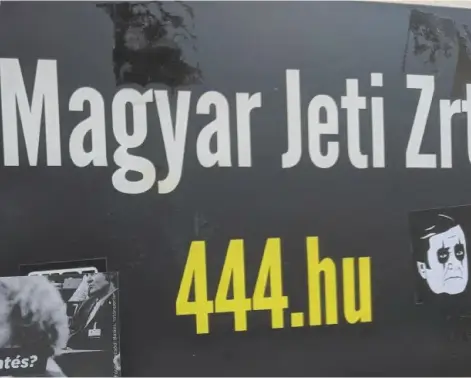
At 444.hu, the online news portal we founded in Budapest in 2013, and its publisher Magyar Jeti Zrt, we’ve had to find alternative sources of income to survive, including receiving grants from Civitates and other sources.
During the three years that we’ve worked with Civitates we’ve undergone tremendous changes: 444.hu had a purely advertising based business model, now it’s predominantly subscription-based. Most of our spendable revenue comes from our readers.
Since the Civitates’ grant started, a major change is that we launched Lakmusz, Hungary’s first dedicated fact-checking site, which is part of an international consortium led by Agence France-Presse (AFP). Lakmusz is now a respected force in the international fact-checking community, and its editorial team continues to grow in numbers, capacity and diversity.
We have produced significant, revelatory public interest journalism.
For instance, in 2024 we revealed that the Hungarian President, Katalin Novak, had pardoned a man convicted of helping to cover up sexual abuse in a children’s home. This caused an uproar of protests and ultimately led to her resignation.
Our documentary, ‘Untruthfully’, exposed the Orbán government’s covert campaigns against NGOs and politicians. It’s been viewed almost 800,000 times, was widely cited in other media, and in several major public protest events.
We also exposed how our prime minister’s number one crony bought a yacht worth more than EUR 70 million – our drone footage of it resonated with the public.
All of this work is being carried out in an atmosphere which is far from conducive to investigative journalism. The latest threat we face is Hungary’s new Sovereignty Protection law. We’ve been closely monitoring and highlighting its dangers. Under it, the most basic norms of law have been discarded with dire consequences for independent media, civil society – and democracy itself.
The need for fact-based journalism is so great because of the extremely high levels of disinformation, not just in Hungary but almost everywhere. The challenge is sky high, but there’s no way forward for any society without strengthening its resilience to misinformation and disinformation.