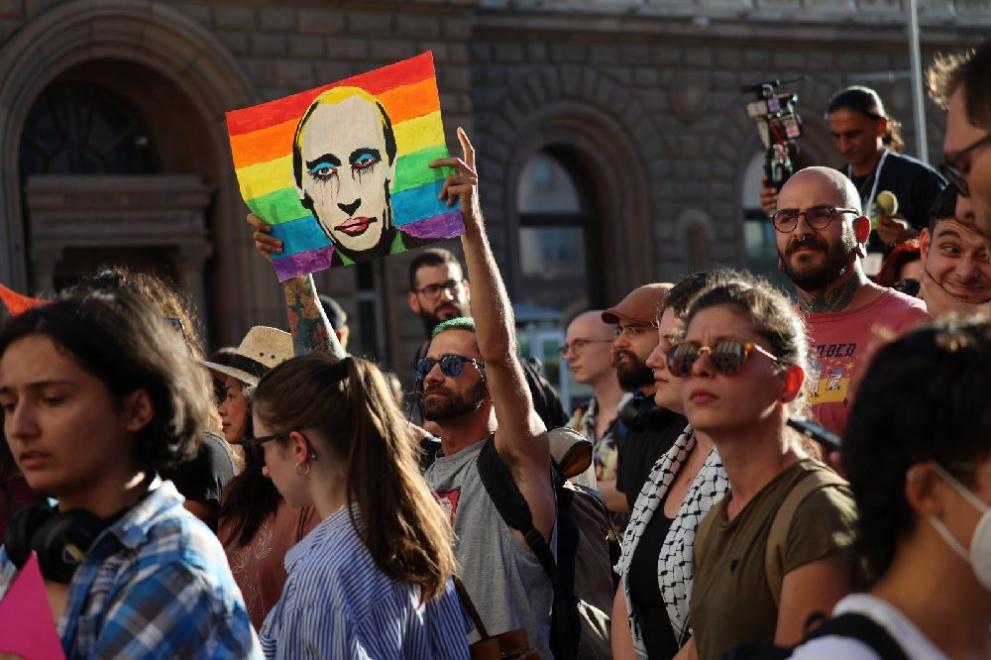
For the seventh time in three years, Bulgarians head to the polls on October 27 to vote in parliamentary elections. Many hope – but few believe – that the political deadlock that’s gripped the Balkan nation since 2020 will finally be broken.
That was the year that mass protests erupted, as people took to the streets to demonstrate against spiralling corruption and what they decried as the capture of the state by an oligarchic mafia.
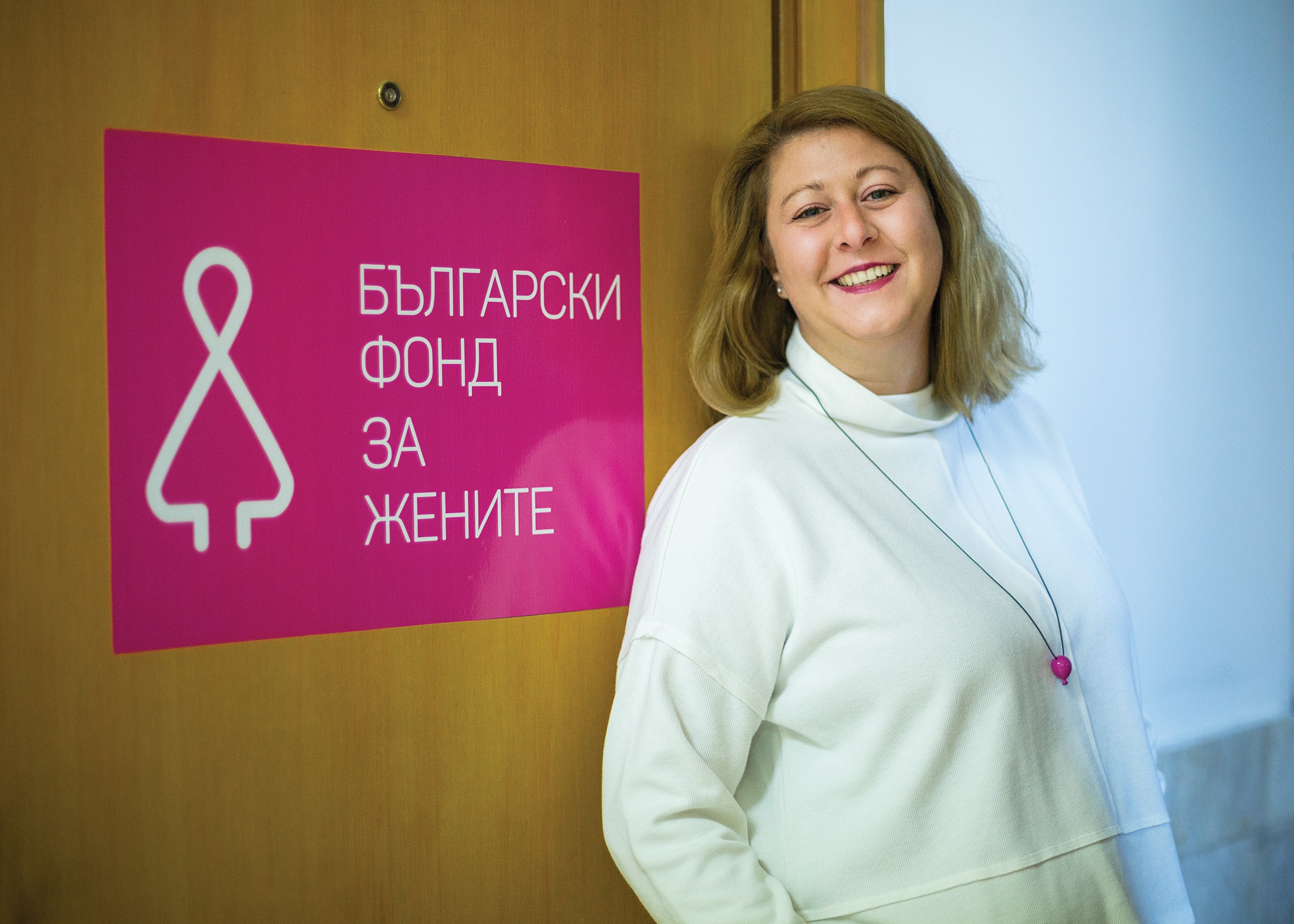
The past few years of political instability has taken its toll on the work of Bulgaria’s civil society, says Nadejda Dermendjieva, Co-Director of Bulgarian Fund for Women (BFW). BFW supports feminist grassroot groups, CSOs and activists working to advance women’s, girls’ and LGBTQI+ rights, as well as to eliminate gender stereotypes, and to end gender-based violence and discrimination.
“In a way, the political crisis is killing civil society’s work. We’ve had interim governments for three years. This has blocked our advocacy work, because there’s no-one to advocate to. I believe government and civil society can’t function without each other. But dialogue between us is broken. Of course, we’re still doing some educational work on gender inequality, human rights and democracy with politicians, but it’s not enough,” says Dermendjieva.
“The interim government is only preoccupied with preparing for the next elections. There is no thought for people’s lives. Civil society is pushing to improve people’s lives and improve policies… Hopefully if we have a stable government, we may be able to rebuild the dialogue with the government,” she adds.
Gender backlash
BFW, a Civitates’ grantee partner since 2018, is Bulgaria’s only feminist fund, with around 300 civil society partners of various sizes around the country.
It was founded 20 years ago, when it became clear that Bulgaria would join the EU and international donors left the country (and other Central and Eastern European (CEE) nations), under the rationale that the EU funds would replace international ones. But sufficient EU funding for women’s rights and gender equality hasn’t materialised , says Dermendjieva.
BFW has worked to fill this gap. In doing so, it has built a broad coalition that extends beyond feminist and LGBTQI+ groups, by working strategically with other Bulgarian organisations involved in the struggles to strengthen democracy and widen civic space.
“We are a needs based donor, which means we provide core support, something that Civitates also does,” explains Dermendjieva, who has a Master’s degree in gender studies, and has worked for human rights-focused non-profits for almost 15 years.
“We try to listen and respond to the needs of the feminist movement in the country and to the civil society organisations. We work for democracy from a gender equality perspective. Without gender equality there is no democracy.”
Those working to tackle domestic violence, and promote gender and LGBTQI+ justice have been denigrated in recent years, as the culture wars which prevail elsewhere have spread their tentacles to Bulgaria.
“In my life I never would have imagined that one day it would be dangerous to share that I am a gender expert,” says Dermendjieva. “The anti-gender movement is becoming stronger and is very well-funded. It is also politically represented. Meanwhile progressive civil society is underfunded and on the verge of burnout – but still fighting.”
In 2021, the European Parliamentary Forum found that between 2009 and 2018, $702.2 million (US) in “anti-gender funding” was channelled into Europe with the aim of “overturning laws related to sexuality and reproduction”. It came from ultra-conservative elements, religious extremists and others in Russia, the United States and elsewhere intent on “rolling back human rights”.
Dermendjieva says that the anti-feminist, anti-gender and anti-LGBTQI+ rights backlash in Bulgaria intensified from far-right and religious fundamentalist quarters after 2018. One of the key ways this backlash has manifested itself is in the law.
The country’s far-right pro-Russian Vazrazhdane (‘Revival’) party recently published the text of a law prohibiting the “propaganda, promotion, or incitement” of LGBTQI+ “ideas and views” in schools. “This is the first time that Bulgarian law introduces the legal possibility of harassment and violence towards LGBTQI+ people,” observes Dermendjieva.
What’s more, Bulgaria has not ratified the Istanbul Convention, Council of Europe’s legislation aimed at preventing and combating violence against women and domestic violence. Nor has it adopted the National Strategy for Children’s Rights, which promotes children’s wellbeing and rights as autonomous human beings – tackling the deeply ingrained notion among many that children are parents’ property.
Now, following Hungary’s and Georgia’s attempts to introduce similar legislation, Vazrazhdane has proposed the Foreign Agents Law.
“If it passes, it will mean that if a Bulgarian citizen or organisation receives an amount from abroad higher than €500, they will be branded foreign agents,” says Dermendjieva. Many fear that this law forcing people to register themselves as foreign agents will stifle freedom of expression, further restrict civic space and open the door to repression.

Unconditional solidarity
The imminent election offers Bulgaria the remote prospect of emerging from its present political stasis, and finding a path towards a more stable future.
“The pressure is huge. We know it’s not on us, it’s on the politicians, but our society’s future depends on the results of the elections. It’s the politicians’ responsibility to take the country out of this crisis. We, as civil society, are already doing everything we can,” says Dermendjieva.
She draws inspiration from BFW’s partners and their shared solidarity.
“Civil society and non-profit work is not for everyone. I guess you have to be a little bit crazy – in a good way – to work in this field. You have to be positive and stay hopeful. We have feminist values like self and collective care. We support each other. We have wonderful partners around the country who give us hope, because they fight on a local level and a national level. And it’s not easy to fight in small rural places, for example, where repression can look even worse.”
Unity is paramount, she says.
“The progressive civil society sector must stay together. There is something called unconditional solidarity. So when one group is attacked, I think all CSOs should react and show solidarity. And solidarity is not a word. Solidarity is action.”