
How we consume news has changed at a dizzying speed in recent years.
The problems this has created are well-documented.
Algorithms are creating ‘filter bubbles’ and ‘echo chambers’, which amplify some sources of information and suppress others. The advertising-led business model has collapsed, as advertisers instead funnel billions to social media companies. At the same time, bad faith actors are spreading falsehoods online at a speed and scale which history’s greatest propagandists could hardly have imagined – with sometimes devastating consequences. On top of this, in many countries media freedom is being curtailed through lawsuits, tighter regulations and threats and intimidation.
Yet, despite fewer people expressing trust in traditional news sources, there’s still a huge appetite – and democratic need – for fact-based journalism which gives citizens the information they need to make informed decisions.
Across Europe, against the odds, independent media organisations are trying to meet this need. They are doing so by innovating new business models, and uncovering stories that powerful, vested interests would prefer remained hidden. And they are finding creative, engaging methods to tell them.
The following short profiles of four Civitates’ grantee partners – Civio, Direkt36, Pismo and Pod črto – offer inspiring examples of this.
Each organisation is producing work which follows investigative journalism’s finest traditions: holding power to account through careful and rigorous reporting. And each outlet is using cutting-edge methods to reach and expand their audiences, including narrative visualisation such as video games, film and infographics, as well as podcasts.

Civio
Based: Madrid ,Spain
Founded: 2012
Civio is ‘making the public sector truly public’. It is the first organisation in Spain to specialise in monitoring public authorities through journalism, advocacy and technology.
Civio use data-driven journalism to tell neglected but critically important stories on housing, the environment, immigration, justice and other areas of public interest.
Its small team of 10 people often spend months burrowing into a subject, says Civio’s co-director Eva Belmonte: “We never publish opinion articles and columns. We believe that the public needs in-depth information to have an informed debate. So we put the data and facts we discover from our investigations into the public domain, and let our audience draw their own conclusions.”
The challenge is turning complex data into stories which can engage the wider public. “The best way is to visualise data in a simple way. We don’t want our stories to be for a niche audience, but to reach the general public,” says Belmonte, who previously worked for El Mundo newspaper in Barcelona, and who now supervises Civio’s investigations.
A striking example is the video game Civio produced earlier this year, where players can get a sense of the multiple barriers migrants face to become European citizens, and the enormous disparities between who gets to be European, and how they achieve it.
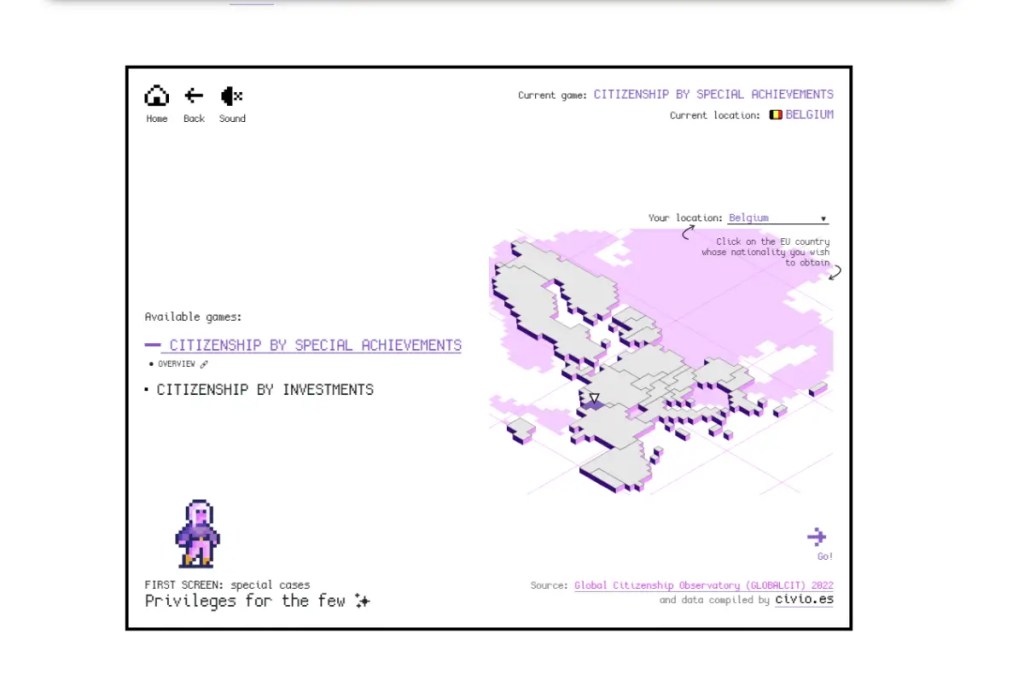
Combining scrupulous methodology and interactive technology, the game strips away the myths, rumours and outright lies that shroud so much of the heated debate around migration and naturalisation in Europe.
Carmen Torrecillas, who designed the game, says:
“We think if something’s well-designed and, as in this case, has a gamification aspect, it will grab people’s attention. We hope the game can increase empathy by showing the reality of peoples’ lives.”
Torrecillas was involved in the process from the start, joining the interviews with the migrants whose diverse stories are told in rich detail. This deepened her understanding of their lives and their labyrinth paths to citizenship, and helped her capture the right tone in the game.
She says: “The data is quite complex, because there is a huge matrix of details covering how to access nationality in so many different EU countries. But we want this story to be accessible for as many people as possible and not just specialists.”
The response to the game has been overwhelmingly positive. “It’s had a lot of reaction on social media, where it’s easier to share, and our data shows that it really worked in terms of the time people spent on the story,” says Torrecillas.
Direkt36
Based: Hungary
Founded: 2014
Direkt36 exposes abuses of power, corruption, negligence and other wrongdoing through tough but fair investigative reporting.
András Pethő was full of optimism when he began life as a journalist more than 20 years ago. Hungary had emerged from communism around a decade before, a new generation of committed young journalists was entering the profession, and the internet seemed to offer endless possibilities for the free flow of information.
But in the following years, the industry underwent a seismic change. “There are the changes that have taken place in the news industry all over the world, with the business model turned upside down and social media disrupting the traditional flow of information. On top of that, we have this hostile political environment in Hungary,” says Pethő, Direkt36’s co-founder and director.
“The space for independent journalism here has shrunk. Independent journalists are targets for government propaganda. It’s quite common for politicians or government propagandists to attack journalists and spread lies about them. It’s getting worse because the government is taking administrative steps against independent media, including through its new Sovereignty Protection Act.” (The Act effectively brands independent newsrooms as foreign agents and threatens them with financial sanctions if they receive funding from abroad.)
Pethő, who has worked for the BBC World Service and the Washington Post’s investigative unit, was previously an editor at the major Hungarian news website Origo. But after coming under intense pressure for pursuing a politically sensitive story, he resigned and in 2014 founded the non-profit company Direkt36, with two other journalists, Gergő Sáling and Balázs Weyer.
Direkt36, which is partly financed by its membership model, is a shining testament to Pethő’s belief that despite the challenges “you can still do good journalism”. They are not constrained by the vagaries of daily news cycles. “We dig deep into a subject and craft stories that nobody else covers. That’s what makes us different.”
Examples of the public interest investigations Direkt36 has produced in recent years, include: the story of Russian hackers infiltrating Hungary’s Foreign Ministry, President Viktor Orbán’s son’s involvement in the military campaign in Chad (an investigation they collaborated with Le Monde on), revelations around Pegasus, the military-grade spyware designed to hack smartphones, and the secret purchase of Euronews by a company linked to the Hungarian government (also in partnership with Le Monde and Expresso).
They have also found creative ways to reach new audiences through films and podcasts.
“Most of my colleagues come from a written journalism background, but we saw how things were changing, and have produced audiovisual content for many years now,”says Pethő.
The public enthusiasm for revelatory public interest journalism is reflected in the number of YouTube viewers their films attract, starting with their first foray into long-form documentary, the harrowing story of hospital-acquired Covid-19 infections – see video below -, which was among a series of Direkt36’s reports on the Hungarian state’s failures during the pandemic.
Podcasts have proved to be a similarly rewarding route to reaching new audiences, with tens of thousands of people listening to the hour-long show every two weeks, where Direkt36 reporters discuss their investigations.
Pethő may not have foreseen the pressures he would face when he embarked on his reporting career two decades ago, but the obstacles he and the rest of Direkt36 team have faced in that time have not stopped them from producing groundbreaking public interest journalism.
Pismo
Based: Poland
Founded: 2017
Pismo aims to influence Poland’s current and future opinion leaders and reach the growing number of news and press avoiders.
How can news organisations attract audiences when trust in the media is declining?
It’s a question that Piotr Nesterowicz, the founder and CEO of the monthly Pismo: Magazyn Opinii and the Pismo Investigation podcast serial, has grappled deeply with.
In Poland, distrust of the media is increasingly pervasive.
According to the 2023 Reuters Institute Digital News Report, only 42% of Poles trust the media, and only 19% believe the media are independent of political influence. These so-called ‘news avoiders’ are instead turning to partisan, polarised and unreliable sources of information to fill the void and make sense of the world.
“The ‘news avoiders’ tend to be younger people, those from lower socioeconomic backgrounds, those living outside the largest cities,” Nesterowicz says.
To counter this, Nesterowicz, who was a management consultant before becoming a successful fiction and non-fiction author, founded Pismo in 2017.
“We wanted to be a role model for in-depth, high-quality, non-partisan journalism that’s working for a public purpose, and to encourage Polish opinion leaders to reflect on reality, and better understand what’s going on around them.”
“Clearly, we’re not going to change the overall trends of partisanship and the tabloidization of the media, but we want to show that this type of journalism is still possible. That’s why we developed the concept of Pismo. We didn’t want to cover daily news or political sensations, but to provide deeper insights into what’s happening.”
To that end, Pismo focuses on long reads, publishing in three formats from the start: paper, digital and audio. Their in-depth reporting is exemplified by the flagship ‘Lens’ format, examples of which include the remarkable The Promised Land feature, which took a year to produce and follows the perilous stories of migrants trying to reach the Polish-Belarussian border, and its Earth series, which lucidly conveys the realities of the climate crisis.
“If you want to explain and describe complex issues you need the space to do so. You also have to have extremely diligent fact checking. It’s also important to have human stories, if possible, to engage people,” says Nesterowicz.
Pismo Investigation Podcast – Poland’s first narrative non-fiction podcast serial – follows these same principles, and is finding an audience among the country’s ‘press avoiders’ in the process.
“Our serials rely on narrative storytelling techniques that you find on streaming platforms and TV, with cliffhangers and so on,” says Nesterowicz. “The difference is that it’s non-fiction and 100% based on facts. That’s the way to engage people.”
The results speak for themselves: in five seasons, Pismo’s serials have been listened to 2.2 million times, attracting a young and female audience. Pismo Investigation has also been nominated for and awarded Poland’s most prestigious audio and journalism awards, such as Grand Press, Best Stream Awards, Audionomia and Podcast of the Year.
With plans to increase the number of productions from one season a year to four, Pismo’s quest to engage Poland’s growing number of media sceptics is set to go from strength to strength.
Pod črto
Based: Slovenia
Founded: 2014
Independent non-profit media outlet which focuses on investigative reporting, data journalism and in-depth stories. It believes in public interest ‘watchdog’ journalism.
Taja Topolovec was already a media trailblazer at 17 when she started a school radio programme which broadcast weekly from the headmaster’s office. At 21, she co-founded her first publication, an online culture studies magazine, and shortly afterwards was made deputy head of digital development at Slovenia’s largest newspaper publisher, Delo, d.d.
Three years later, in 2014, she co-founded Pod črto (The Bottom Line in English) Slovenia’s first independent, non-profit investigative journalism outlet.
For the past decade, both online and since 2017 in its podcast, Pod črto has shone a light into the crevices the powerful would prefer remain hidden: revealing corruption in high places, digging into otherwise ignored social issues, such as poverty, crime, justice, health, environmental degradation and more.
“When we started people thought this wasn’t possible in Slovenia because there’s no tradition of investigative journalism, no tradition of donors and readers supporting non-profit media in Slovenia,” says Topolovec. It was also a time of precarity in the media industry, in the aftermath of the financial crisis which hit Slovenia in around 2010, and many journalists struggled to make a living. “It’s kind of amazing to look back and see how far we’ve come in a decade,” she says.
Seven years ago, to expand their audience and understanding that people like to consume their media in different ways – “some are more visual, some prefer to read text, others are more into audio” – Pod črto started producing podcasts, with six to 10 episodes in each series. From there the team, which usually numbers around ten and is project-based, branched into multimedia production, combining photography, audio and video.
They began their podcasts with just two people using borrowed microphones, and initially – as much as possible without compromising sources or revealing other sensitive facets of their work – they pulled back the veil on Pod črto’s written investigations by discussing them in-depth.
“There’s a huge part of investigative journalism which the public don’t see. Months of data gathering, analysis, freedom of information requests that are denied, legal battles for data, working with sources,” Topolovec explains.
Since then, Pod črto – some of whose investigations are conducted in collaboration with other European media outlets – has shifted into producing documentaries with powerful narratives.
“Our aim was not to just talk about our findings, but to take our listeners with us into the stories, even if they’re complex and data-heavy.”
They have found three inventive ways of doing this.
First, by following characters whose journeys and lives listeners become invested in. “We used this approach in our investigative series about astroturfing, in which we introduced a series of characters who personalised very abstract and data heavy issues about attacks on Twitter.” Its success can be measured by the fact that it doubled Pod črto’s podcast audience.
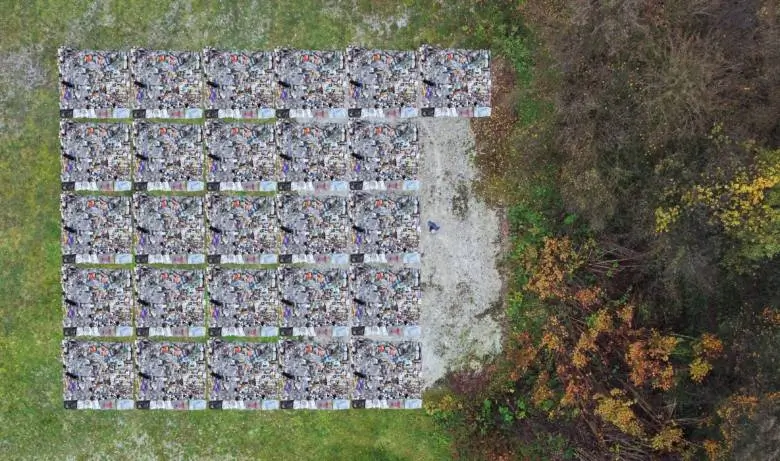
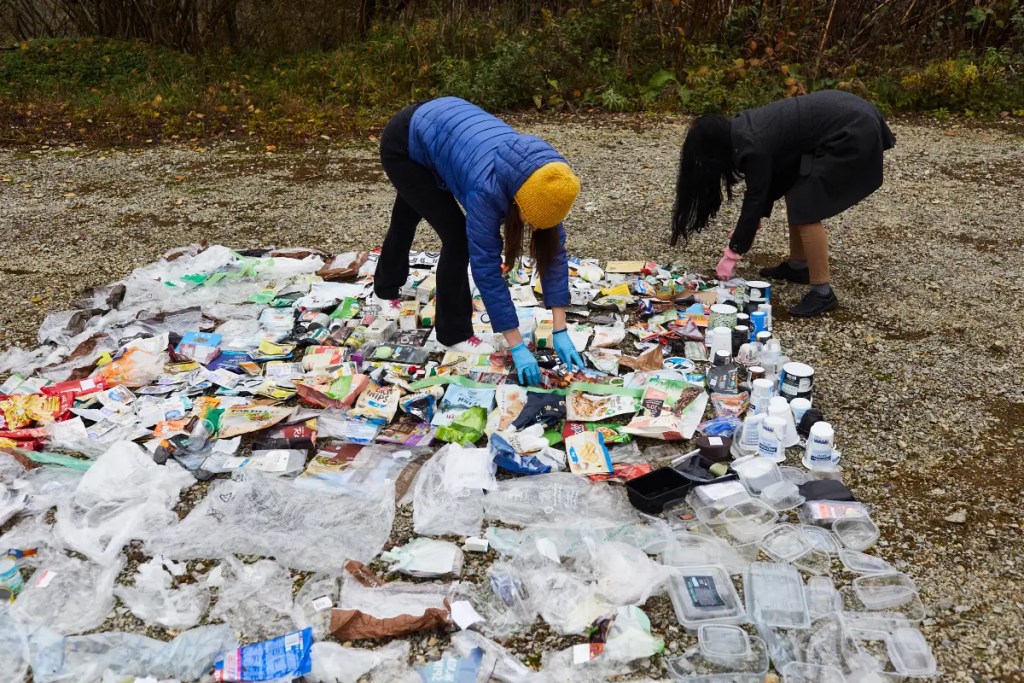
Second, by ‘materialising’ their data. “Sometimes it’s hard for audiences to connect to huge data and grasp the reality of numbers.” An example of how Pod črto overcame this, is in their podcast episode “What is our plastic imprint?”. In it, the journalists themselves collected their own plastic waste over 14 days, and built a square from it which measured 3.6 by 3.7 metres, linking this to global issues around the dangers of plastic.
Third, by letting audiences experience the issue being investigated. In 2021, for instance, Pod črto exposed how Ljubljana’s municipality was exchanging outdoor advertising in public spaces at a secret price to the local city bike scheme, including in historical parts of town. “In the podcast episode “Bike for 3 euros, ads for 22 years” we rented a bike from the same company and took our listeners with us on the tour around Ljubljana. Since we geo-localised all the billboards, lightboxes and city-lights that were built in exchange for the bike rental system, listeners could follow the path our data analysis had identified,” says Topolovec.
These creative approaches have helped Pod črto expand their audience, as they find new ways to follow the old journalism mantra of trying to avoid the abstract in favour of concrete particulars: “the smell of human breath, the sound of voices, the stir of the living.”