Some journalistic scoops change the news agenda for a few days. Others change the course of a country’s political history. The story that the Hungarian independent online news portal, 444.hu, broke on February 2, 2024, clearly falls into the latter category.
It revealed that Hungary’s President Katalin Novák had pardoned a man convicted of helping cover up sexual abuse in a children’s home. In the following few days, they and other independent media outlets including fellow Civitates’ grantee, Direkt36, uncovered further layers to the scandal.
Direkt36 exposed the role played in the scandal by Zoltán Balog, the head of the Hungarian Reformed Church, a confidante of Novák’s and “spiritual mentor” to the Prime Minister, Viktor Orbán.
And the 444 team applied Open Source Intelligence (OSINT) methodology – which they had learned from a third fellow Civitates’ grantee, Bellingcat – to trace Balog, the mastermind behind the pardon, to his Austrian hiding place.
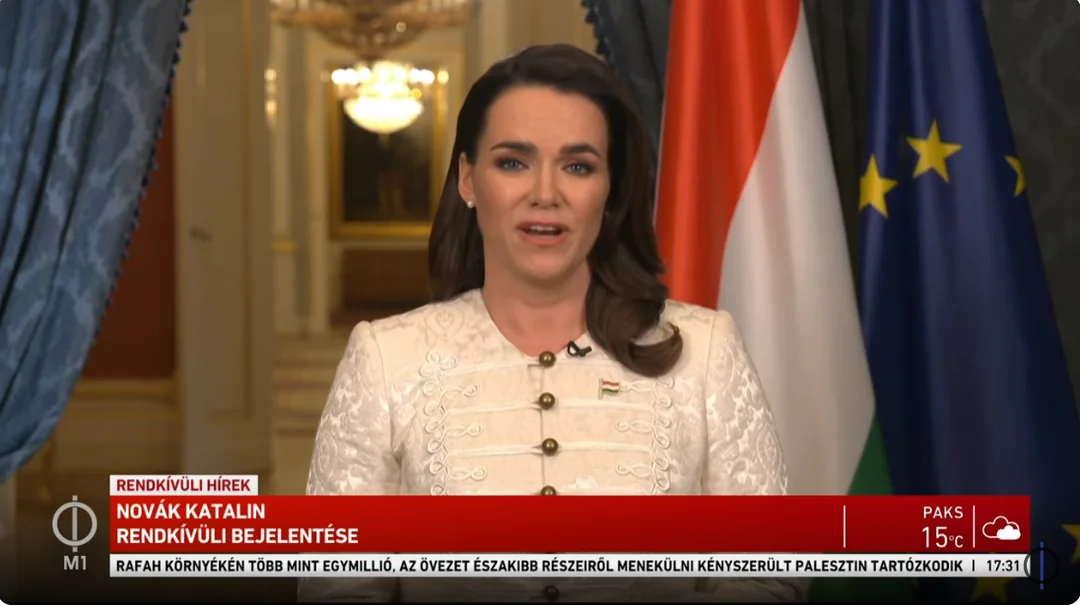
On February 10, in the face of mounting public anger, Novák announced her resignation live on national television. On the same day, the justice minister at the time of the pardon who had signed off on the decision, also resigned from her active position as the leader of Hungary’s ruling party FIDESZ’s European Parliamentary candidate group.
But it was far from the end of the matter.
The following Friday, February 16, tens of thousands of people, including celebrities and public figures, gathered to demonstrate in Heroes’ Square in Budapest, and the scandal continues to reverberate – with Orbán’s falling poll ratings and a sharp rise in the popularity of a newly founded opposition conservative TISZA party being traced to it.

Media under pressure
444.hu’s revelations and Direkt36’s follow-ups are even more extraordinary given the context in which they appeared.
Since returning to power in 2010, Orbán’s government has attacked media pluralism and independence using various weapons – from the law to surveillance, from smear campaigns against journalists (see for instance, 444’s documentary here) to turning public broadcasting into a ‘propaganda machine’.
Gábor Kardos, who co-founded 444.hu in 2013, has worked as the CEO of its publisher Magyar Jeti Zrt ever since. “I’m proud of the waves that independent media can make in Hungary under such a dominant government,” he says. “I believe that while [breaking stories such as the pardon scandal] is vitally important, our everyday in-depth coverage of Hungary’s public sphere is the core of what we do, as it gives the public access to credible, authentic information… We are not freedom fighters and have no political motive.
We’re just normal believers in basic democratic values and the crucial role of independent media in upholding them, as part of the struggle for a well and truthfully-informed society.”
Acting fast
Like 444.hu, Direkt36 pursues the truth with a rigorous determination.
While they usually focus on long-term investigations which take many months, when the scandal broke, Andras Pethő, Direkt36’s director and co-founder, says they knew they had to publish quickly.
“Our model is to step back from the daily news cycle, but this was such an unprecedented story, we wanted to know more about the circumstances, and why the President had given the pardon”, says Pethő.
Through trusted sources, Direkt36 and their publishing partner Telex, were able to piece together the scandal’s background, and the crucial role played in it by the head of the Hungarian Reformed Church, Zoltán Balog.
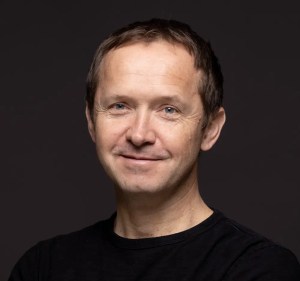
Balog had lobbied Novák to pardon a former deputy director of a state-run children’s home, who had been convicted after blackmailing children into withdrawing their testimony against the home’s director, who had sexually abused them for years. Within a day Direkt36 and Telex published the first batch in a series of articles on it.
“We kept digging,” says Pethő, who believes the story reveals how – despite all the barriers they face – “you can still do good journalism which exposes abuses of power and corruption.”
Kardos echoes these sentiments.
He says that at a time of proliferating dis- and misinformation: “It’s crucial that media both in Hungary and internationally strengthen themselves, and find new ways to reach audiences. The resources on the other side [those spreading disinformation] are practically infinite, and that’s what you see from Europe to Africa, from North to South America, and from Asia to Oceania. In every single continent you feel that the future is being decided by disinformation spreaders. And that’s what we’re trying to hold the line against.”
This article is part of Civitates Annual Report 2024, which will be published in May 2025. To discover more stories like this one, stay in touch by signing up for our newsletter using the link below or follow us on LinkedIn.