The Investigative Reporting Project Italy (IRPI) is the first centre of its kind in Italy. It specialises in long-term investigations, which often carry personal and legal risks. Since 2020, for instance, IRPI has faced ten SLAPPs, three civil litigations and seven criminal suits.
Despite these challenges, IRPI is thriving, with significant growth in their digital audiences in Italy and elsewhere. Cecilia Anesi, IRPI co-founder and centre director, and Lorenzo Bagnoli, co-chief editor, explain how they are innovating new ways to achieve their mission of giving people the information they need to make sense of the world.

Collaboration is key
Cecilia Anesi: We founded IRPI after some of us attended the Global Investigative Journalism Conference in Kyiv in 2012. We were just a bunch of freelancers, most of us very young. We realised that unlike other news organisations from around the world, no major Italian outlet had sent their journalists. So back in Italy we got together and created a non-profit organisation as a centre for investigative reporting, inspired by those that were present at the conference.
We publish between two to four long form stories per week. They can be pure investigations or reportage. We have a team of 13 journalists, and collaborate with about 40 freelancers. We’re part of the Global Investigative Journalism Network; a member centre of OCCRP; and one of the founders of Reference Circle, the circle of European independent media. In Italy, we also collaborate with local media or grassroots organisations doing community journalism. So we go from international to national: going to the hyper local community [level] and making them feel that their story, their struggle can be told, is just as important as major international investigations.
It’s very important to be in a network where we can exchange information and stories, as well as knowledge and advice. That’s one of the most important things: to not feel alone in this struggle.
Engaging audiences
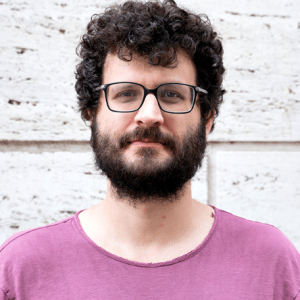
Lorenzo Bagnoli: We try to learn from every story we publish. We focus on character driven stories; data driven journalism; sometimes we use pictures and try to immerse our readership into a specific context. But we always aim to be as respectful as we can to the context [of the stories].
CA: We’ve recently enhanced how we communicate our stories by studying our audience. For instance, we’ve seen a story go wild on Instagram and bring in a lot of young people to our website using narrative carousels [a social media post using a series of multiple swipeable images].
Cecilia Anesi, Co-Founder and Center Director of the Investigative Reporting Project Italy (IRPI), explains how they are innovating new ways to achieve their mission of giving people the information they need to make sense of the world.
Cities for Rent is an award-winning cross-border collaboration involving journalists from 16 European countries investigating abusive practices in housing at a time when many people can’t afford somewhere to live.
CA: [Cities for Rent] is not just an investigation, it’s a tool for citizens to understand the social problems around housing that impact their lives.
LB: Cities for Rent started after a data harvest and was a collaboration with foreign colleagues into corporate landlords across Europe, and how public policies can be oriented by corporations. After three years of investigation we felt that we had enough material to write a book about it, ‘Città in affitto – Un requiem per il diritto all’abitare’ (‘City for rent – A requiem for the right to housing), which has been published. Because there were many journalists involved, we chose not to by-line their names [in the book], but use a pseudonym: Gessi White [based on the historical figure of Jesse White]. She was a journalist who investigated the housing situation in Naples in the late 19th century. She had a vision of journalism as a way to educate people. This is something that we believe is still true.
Since 2012, IRPI has reported on Italian organised crime and their white-collar enablers, corrupt politicians, brokers and businessmen, in Italy and abroad, including in Slovakia with the journalist Jan Kuciak. Kuciak and his fianceé Martina Kušnírová were murdered in 2018. IRPI have continued working with fellow Civitates’ grantee the Investigative Centre of Ján Kuciak (ICJK), which was founded in response to Kuciak’s murder.
CA: Once Jan was killed, we were put under police protection [although in the end, the police determined that his murder was not linked to this specific investigation]. We kept working on the story and one year after Jan was murdered, we published a follow up, and in 2025 published an update on the presence of the Calabrian mafia in Slovakia, which was one of the stories that Jan was working on. It’s important to keep shining a light in these dark places.
…if we want to have a better social environment, we need to communicate differently – and we need a better media than we currently have
Cecilia Anesi, Co-Founder and Center Director of the Investigative Reporting Project Italy (IRPI), discusses their collaboration with Slovakian journalists to investigate the presence and influence of the Calabrian Mafia in Slovakia.
Moving forward
LB: The fact that this industry [the media] is pretty broken gives us a kind of advantage and makes our work even more relevant because we can try to find potential alternatives [to the current media model].
This is the best job anyone could ask for. I’m still as passionate as I was on day one, even if it’s pretty hard managing a media outlet these days. But if we want to have a better social environment, we need to communicate differently – and we need a better media than we currently have. That’s what we are trying to create.
CA: It’s not only a broken media system, it’s a whole world that’s broken. We’ve seen what happened in Gaza, what’s happening in Ukraine. People’s voices are silenced. They are so frustrated that they feel like they can’t really change their life or the world. So what we’re trying to do is to follow those voices. We’re small, we can’t follow all the voices.
If they’re suing you, it means that the story matters
Sometimes you wonder – like when you’re being sued – why do I do this? But then you keep going because you know that it’s important. If they’re suing you, it means that the story matters; that it’s annoying somebody who’s most likely stealing public money or doing something that negatively impacts on society.
We believe it’s important because people need information and the tools to understand the world. If you’re an international analyst or a policymaker, then maybe our investigations can wake you up and you can do better policy making. But if you’re a housewife in the periphery of Naples, well, then maybe you can still do something useful for your neighbourhood if you read our story on climate change. That’s why we keep doing it.
This article is part of Civitates Annual Report 2025, which you can read here. To discover more stories like this one, stay in touch by signing up for our newsletter or follow us on LinkedIn.