Welcome to our July 2025 Newsletter!
In last month’s desperately close Polish Presidential election, the controversial radical right historian Karol Nawrocki edged to victory over the liberal, pro-European Rafal Trzaskowski.
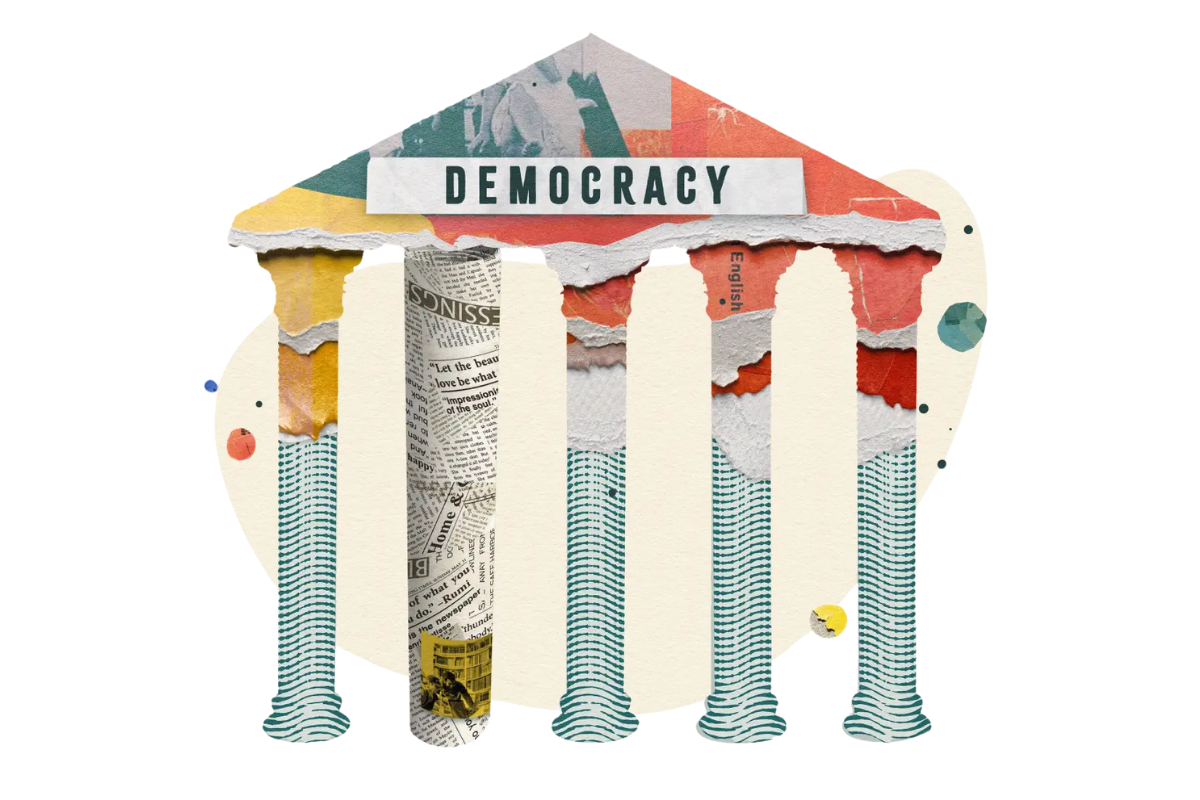
The result was the latest sign of an unmistakable trend: the decline in trust in the rule of law and the liberal model of democracy, regardless of who’s in power.
Yet, as Krzysztof Izdebski from our foundation partner the Stefan Batory Foundation eloquently explains in this month’s feature, there are concrete ways to restore trust and depolarise societies. One of them is through grassroots work which truly connects with the reality of people’s everyday lives.
In the face of the relentless tide of negative news stories, sources of hope and inspiration can appear hard to find.
But away from depressing headlines, every day, civil society across Europe is working to tackle the defining challenges of our time.
These challenges include the threats to democracy and fundamental civic freedoms; the unaccountable power of social media platforms and their noxious hold over our lives and democracies; and the growing political, financial and legal pressures independent public interest journalism face.
Unsung work
This month’s newsletter offers a snapshot of some of the work over the past few weeks that our grantee partners have done to address these issues.
In Austria, for instance, Aufstehn.at played a fundamental role in the announcement that a new clinic for victims of violence will be opened. Romania’s Átlátszó Erdély and Hungary’s 444.hu recently exposed abuse in a high school theatre group which had evolved into a cult-like organisation. The EU DisinfoLab and Logically produced a groundbreaking cross-border investigation into climate disinformation. And the ACT Coalition Hungary, and our other grantee partners and civil society in general, have mounted a powerful response to the Hungarian government’s planned law to curb and blacklist organisations receiving foreign funding.
Individually, each represents an important achievement.
Together – and with all the other often unsung work that civil society is doing every day to protect democracy and freedom in Europe – they provide a welcome antidote to the torrent of bad news, and give us hope for the future.
In solidarity,

ELISA PETER
Director, Civitates

Poland’s presidential election in June exposed the country’s deep divide. Krzysztof Izdebski of the Stefan Batory Foundation explains how to heal rifts and rebuild trust in democracy and public institutions. Read the full article here.

Around 200 people gathered in Paris on June 10 to hear about Démocratiser La Politique’s new research on the alarmingly low presence of people from working class backgrounds among France’s political elite. The research was covered by Le Monde and others. Démocratiser La Politique is a collective of individuals from working-class urban and rural areas, dedicated to bringing democracy out of elite and insular circles and establishing inclusive political representation.
The Romanian Coalition NGOs for Citizens published a comprehensive report on the Romanian electoral year, (2024, plus some of the 2025) highlighting the degradation of political discourse, the abuse of critical voices and fundamental freedoms, and major vulnerabilities in the digital space, among other worrying developments.
Aufstehn.at achieved a decisive win in the fight against rampant violence. For the first time, the Upper Austrian Parliament’s petition committee dealt with a petition from a civic platform in a formal democratic process. The result was that in May Deputy Governor Christine Haberlander (ÖVP) announced that Upper Austria would receive its own violence clinic.
The ACT Coalition Hungary responded to Hungary’s government’s planned law to curb and blacklist organisations receiving foreign funding, by organising 14 actions across the country. Since then, Viktor Orbán’s ruling Fidesz party announced that it will delay voting on the legislation.
Romanian fact-finding online newspaper Átlátszó Erdély along with the Hungarian news outlet 444.hu, has published an investigation into a high school theatre group which became a cult-like organization where abuse was rife. Their report has opened a debate about the prevalence of abuse in theatre and the protection of minors in the country.
The European Cultural Foundation (ECF) was the main supporter of the PublicSpaces conference in Amsterdam on June 13, and contributed to it with two sessions. The energy and engagement during the conference showed the huge momentum for a digital future that serves the common good. Videos of conference sessions are here.
Meanwhile the ECF’s has announced the first round of LOKAL funded initiatives, a new programme for culture and public engagement.
EU DisinfoLab and Logically (supported by EMIF) published, ‘HEAT it rising! HEAT – Harmful Environmental Agendas & Tactics‘. It’s based on their groundbreaking cross-border investigation into how climate disinformation is strategically deployed across Germany, France, and the Netherlands. The webinar on their findings is here.
The first four episodes of the Portuguese narrative journalism outlet DIVERGENTE’S investigative podcast “Arsonist Country” can be heard here. Portugal burns more than any other country in the European Union and the leading cause of fires is arson. The series uncovers what drives people to leave their house and set fire to everything around them.
Romanian independent media outfit PressOne produced a slew of hard-hitting investigations in the run-up and aftermath of the rerun of the country’s presidential elections in May – including how young Romanians were being recruited on Telegram by a neo-Nazi group based in Moldova. The reporters involved received death threats , sparking a national debate about the safety of journalists in Romania. Despite the threats, PressOne reached over 4 million people in May, underscoring the importance of fearless, independent journalism in moments that test democracy.
Philea is launching a new mapping of funding for media and journalism in Europe, as part of its work with the Journalism Funders Forum (JFF) chaired by Limelight Foundation and Mercator Schweiz. The insights will help guide new funders and shape a stronger philanthropic agenda for independent journalism in Europe.
The deadline for completing the survey is at the end of business on July 15. Those interested can fill out the survey here.

Strength through solidarity
On June 17, Civitates’ Civic Power grantees gathered in Pecs, Hungary for a day of learning, reflection and to get to know each other. Among the pressing challenges discussed were governments’ anti-civil society sentiments (even in countries with ‘pro-democracy’ governments); the restrictive legal frameworks civil society has to operate within (for instance facing SLAPPS and legislation designed to stop organisations receiving foreign funding); coping with exhaustion, burnout and people leaving the field; funding cuts; the rise of extremism and the far-right; and the growing threats to NGOs working with minorities, including those from LGBTQI communities. The meeting was both inspiring and left participants full of hope and ideas.
Time for philanthropy to step up
Our Director Elisa Peter moderated a panel at the Philea Forum in Lisbon in early June to discuss what happens to democracy when people are left behind – and what philanthropy can do in response. Among the key messages to emerge from the event is that we ignore the economic and cultural insecurity that fuels support for populist parties at our peril: one in five people in the EU live below the poverty line, and that poverty excludes millions from meaningful democratic participation. The main take away was that these are challenging times for European democracy, but philanthropy can help renew the social contract — and there’s no shortage of bold, practical ideas to do it.

02 / 07 – Documentary screening. “For you, Portugal, I swear!”
Location: Filmhaus Cinema Cologne (Germany), 6:00 PM
DIVERGENTE’s powerful documentary on the Guinean African Commandos, the first elite troop of the Portuguese Army composed solely of black men, will be shown as part of the Summer School of the Portuguese-Brazilian Institute of the University of Cologne.
28 / 07 – Oxford Media Policy Summer Institute 2025|by Programme in Comparative Media Law and Policy, University of Oxford
Location: University of Oxford, England
Each year, the Oxford Media Policy Summer Institute gathers around 50 participants from across the world to engage in in-depth dialogue on global media policy, freedom of expression, and digital governance.
15 / 08 – The 16th Hackers On Planet Earth Conference – HOPE_16|by 2600: The Hacker Quarterly
Location: St. John’s University Queens, New York City and Online
This convention is for hackers of all types, including artists, educators, experimenters, tinkerers, and more.
26-29 / 09 – Freedom Not Fear 2025|by Freedom Not Fear
Location: Brussels, Belgium
Freedom Not Fear (FNF) is an annual conference on privacy and digital rights.
30 / 09 – Privacy Camp 25
Location: BeCentral, Cantersteen 12, 1000 Brussels, Belgium.
The event, organised by European Digital Rights (EDRi) and others, brings together digital rights advocates, activists as well as academics and policy-makers from all around Europe and beyond to discuss the most pressing issues facing human rights online.
24 / 10 – 17th Dubrovnik Media Days|by University of Dubrovnik
Location: University of Dubrovnik, Dubrovnik, Croatia
The Dubrovnik Media Days is an annual international conference hosted by the University of Dubrovnik, gathering media scholars and communication experts from across Europe and beyond. The event serves as a platform for the exchange of research findings and dialogue between academia, civil society, and media practitioners.
29 / 10 – 2nd European Congress on Disinformation and Fact-Checking – DisinfoCongress 2025|by UC3M MediaLab
Location: Madrid, Spain and Online
DisinfoCongress 2025 brings together researchers, journalists, policymakers and civil society to discuss emerging threats and solutions in the global information ecosystem. This hybrid event will focus on topics such as artificial intelligence, fact-checking, civic resilience, elections, crisis communication and media literacy.
7-9 / 11 – Mozilla Festival 2025|by Mozilla Foundation
Location: Barcelona, Spain
A gathering for people working to build a better digital world. The Mozilla Festival will gather some of the world’s “most curious and creative minds” for three days of workshops, debates, and hands-on collaboration to reimagine the role of technology in our lives.

Jobs:
- The Ashoka Visionary Program is a pioneering, part-time executive leadership journey for changemakers and leaders from across sectors, causes and countries, taking place in Vienna from October 2025 to June 2026. Partial stipends are available. Applications open — apply by July 31. More details here.
- Ctrl+Alt+Reclaim has now opened recruitment for four roles to join the movement – this time also allowing applications from the Netherlands and Denmark. Applications close July 6. More details here.
We Recommend:
- Civic Space Report 2025. The European Civic Forum’s (ECF’s) new report documents an “unprecedented and intensified attack” on civil society and civic freedoms, including restrictions on protest rights, challenges to non-profit funding, and smear campaigns.
- The European Cultural Foundation annual magazine – Common Ground was launched in May. It aims to show that “Europe’s power doesn’t lie in grand narratives or bureaucratic monoliths, but in its capacity to listen, to adapt, to imagine.”
- The Trust, Accountability, and Inclusion Collaborative (TAI) has produced a draft of a global map of pro-democracy and civic space narrative efforts. It includes campaigns, initiatives, and resources promoting inclusive and adaptable storytelling strategies. Over 50 resources on democratic and civic space are now available on the TAI website, under the new 3D Dialogues tab.
- Independent Greek media outlet Solomon’s story We Don’t Feel Comfortable in Our Own Home expanded on their Heat or Eat project. It’s based on hundreds of crowdsourced testimonies from residents across Greece, revealing the widespread and ongoing impact of energy poverty and inadequate housing conditions.
- State of Democracy. The Report, issued by the Romanian Coalition NGOs for Citizens, provides a comprehensive and well documented look into the Romanian electoral year, (2024, plus some of the 2025). This is the English translation.