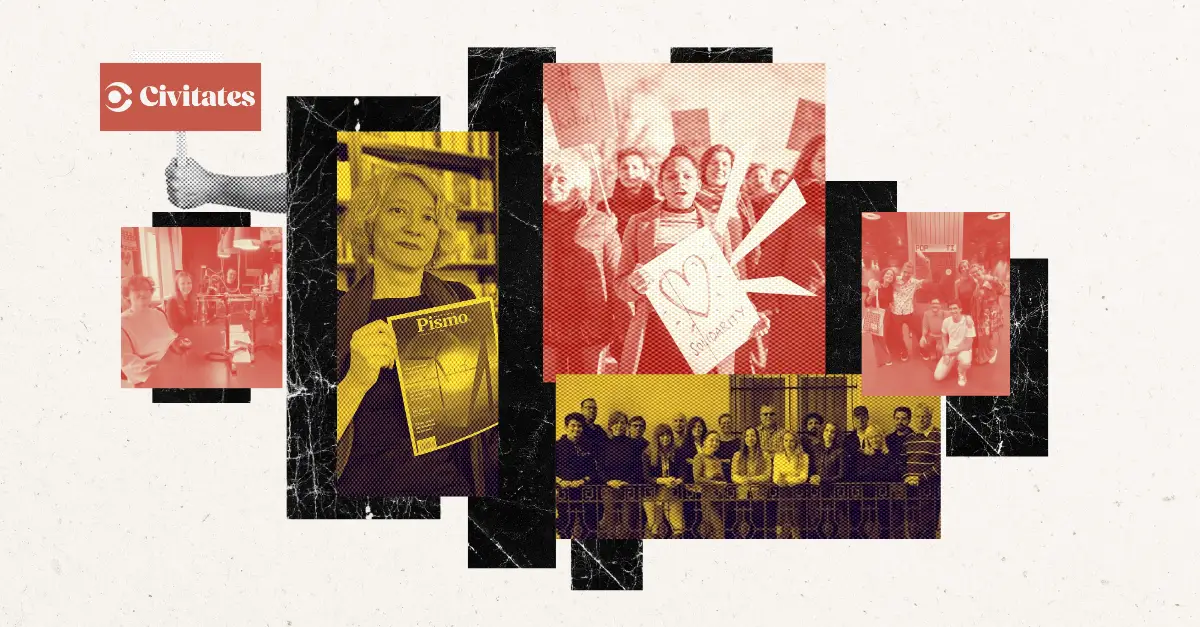
“Civil society’s power lies in its ability to unite diverse voices and advocate for a future where democracy thrives. These new grantee partners embody the resilience, creativity and fierceness needed to protect and expand civic space across Europe. We’re proud to support their vital work in empowering communities, safeguarding human rights, and ensuring that democratic values remain at the heart of our societies.” Elisa Peter, Civitates’ Fund Director.
Despite our grantmaking budget increasing by 25% in the past year, we received more outstanding project proposals than we were able to fund: clearly indicating the critically important work so many organisations are doing to protect civic space and democracy in Europe.
After a painstaking process, we are excited to welcome 19 new grantees to Civitates.
Taking a stand for civic power in Austria
Austrian civil society operates in an increasingly hostile environment. Smear campaigns, funding cuts, and constraints on participating in public life are growing. The wider public, meanwhile, is losing trust in democracy, as conspiracy theories and culture war slogans take hold.
“Civic space in Austria is under unremitting pressure. It’s vital that democracy and human rights are strengthened and protected,” said Eszter Szücs, Civitates’ Senior Programme Manager for Civic Power and Media sub-funds.
In response to these trends, Civitates is funding civil society initiatives in Austria for the first time, through our Civic Power portfolio.
“We’re thrilled to announce six new Austrian grantee partners,” said Szücs. “These projects are taking a stand for civil society. They’re empowering marginalised communities, and engaging citizens in meaningful ways. They’re not only responding to urgent challenges, but helping to create a more inclusive and resilient future for Austrian civil society.”
Civitates selected our new partners (out of 24 applications) for their ability to mobilise citizens, create new alliances and expand civic space:
Amnesty International Österreich is leading the national ‘Protect the Protest’ campaign, which aims to safeguard peaceful protests and combat Austria’s shrinking civic space.
The Human Rights Alliance (HRA) project is led by the Austrian League for Human Rights. The alliance is uniting Austria’s fragmented human rights sector by providing a platform to work together on key issues.
Kinderbüro Universität Wien is empowering marginalised youth to engage in democracy through the Stepping Stones project. The project empowers students from lower-income districts, especially those from migrant backgrounds, to become active citizens and participate in democracy.
Aufstehn.at is building grassroots participation across Austria through its petition platform, mein.aufstehn.at.
LEFÖ empowers migrant women and sex worker-led organisations to advocate for their rights and foster inclusion.
Documentation & Counseling Center Islamophobia & Anti-Muslim Racism, the Dokustelle project tackles anti-Muslim racism, particularly within healthcare and service access.
Re-shaping technology’s influence on public discourse

The EU’s recent wave of tech regulations, such as the Digital Services Act (DSA), marks a turning point. These policies offer a golden chance to hold often extraordinarily powerful online platforms to account, and to create a more transparent and ethical digital sphere.
But putting these regulations into practice demands bold ideas, collaboration, and on-the-ground experimentation. Our 11 Tech & Democracy grantee partners have shown the ability to do this in abundance.
“Regulating social media and other online platforms means defending and empowering users. That’s why we’re focusing at the national level: it’s time to move the debate, and the tools offered by regulations like the Digital Services Act, closer to citizens,” said Claudio Cesarano, Senior Programme Manager for Tech & Democracy.
The organisations below are already making tangible impacts, and are at the forefront of creating safer, fairer and more inclusive online spaces. We’re delighted to support them as they continue to do so.
AI Forensics – France investigates influential and opaque algorithms. They hold platforms accountable by conducting independent and high-profile technical investigations to uncover and expose the harms caused by their algorithms.
Féministes contre le cyberharcèlement is an intersectional feminist grassroot movement that counters cyber harassment and online violence against women.
La Quadrature du Net – France is the leading digital rights group in France promoting digital rights and freedoms. They advocate for French and European legislation to respect the free circulation of knowledge as the foundation of the internet.
Point de Contact – France offers guidance and tools to users to report illegal and harmful content online. They focus particularly on countering the spread of child sexual abuse, terrorist and extremist content.
Hope and Courage Collective – Ireland supports Irish communities to counter the spread of disinformation, fear, racism and fascism. Their approach combines evidence gathering, reporting to authorities and training communities on responding to hateful attacks.
Irish Council for Civil Liberties (ICCL) is Ireland’s leading independent human rights organisation, which was founded in 1976. Its unit “Enforce” works to investigate, advocate, and litigate to enforce digital rights in Ireland, Europe and globally.
Uplift – Ireland is the largest people-powered campaigning organisation in Ireland. It serves as the community of over 342,000 people who take coordinated action for progressive change across Ireland.
European Digital Rights – EDRi is the biggest European network defending rights and freedoms online. It gathers 50+ NGOs, experts, advocates and academics pushing for robust and enforced laws, informing and mobilising people and promoting a healthy and accountable technology market.
EU DisinfoLab gathers knowledge and expertise on disinformation in Europe by putting together research, investigative work and policy analysis. They animate a vast network of researchers, journalists and disinformation experts.
Wikimedia Europe works to advance access to knowledge in Europe, provide a public voice advocating a public interest internet, and to strive for freedom and fundamental rights in the digital era.
“This cohort is a great example of the different ways we can work on defending our rights online and build better alternatives from the bottom up,” Cesarano says.
Beacons of hope for civic power
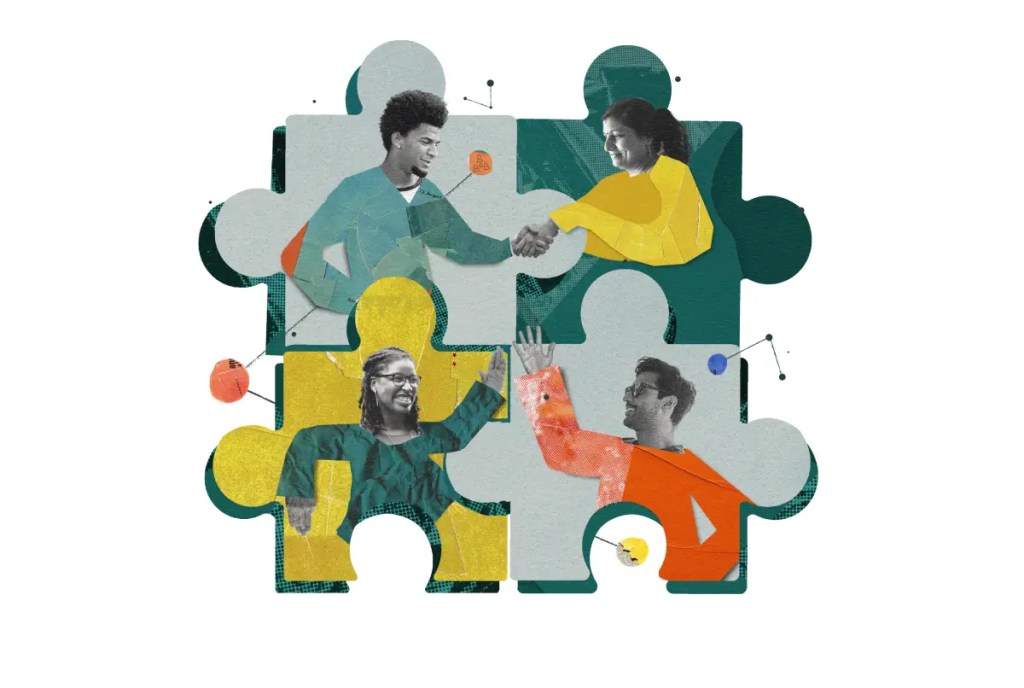
This cohort includes four remarkable new partners and four inspiring recurring ones. Their work embodies the resilience and innovation needed to safeguard civic space across the continent.
While only a few could be selected for funding, the collective strength of civil society is a beacon of hope for the future of liberal democracy in Europe.
Ravni BG: Empowering Bulgaria’s Civil Society focuses on grassroots mobilisation, capacity building, communication and fundraising support, and strengthening community networks across Bulgaria.
OFOP Coalition: Protecting Vulnerable Citizens in Poland is a coalition of Polish CSOs under the auspices of OFOP. They advocate for formal and legal improvements that will enable easier and more effective implementation of civic initiatives.
NGOs for Citizens: Mobilising Communities for Social Change is a coalition of 23 diverse Romanian NGOs, led by Cere – The Resource Center For Public Participation, who are working to expand and safeguard civic space in Romania through continuous advocacy and watchdog activities.
Network to Protect Fundamental Rights and Civic Space in France is an open and flexible network facilitated by VoxPublic, which gathers national and local French CSOs protecting fundamental rights and civic space.
General Assembly of the Independent Press (Fonds pour une presse libre) – France is backed by approximately 100 organisations including media outlets, human rights groups and trade unions. The coalition focuses on defending press freedom in France, and works on media pluralism, urgent legal reforms, and protecting journalists in the face of increasing political pressures.
ACT Coalition for Active Communities strengthens communities in Hungary through training, electoral preparedness, and legal aid. to foster citizen participation through coordinated advocacy.
Beginning Coalition: Proactively Defending Civic Space in Poland defends civil society’s role in democratic life, particularly in the lead-up to the 2025 presidential election. They conduct voter education campaigns, monitor the integrity of elections, and advocate for the protection of civic space.
Human Rights Coalition:Championing Human Rights and Social Justice in Slovakia defends civic space in Slovakia, They comprise a wide range of organisations — including feminist groups, Roma organizations, cultural activists, and international human rights entities like Amnesty Slovakia.
Embracing the new
At Civitates we’re proud to support innovative media organisations who push boundaries, explore new formats, and build sustainable models in the face of financial instability and political pressure.
These Media grantees are shaping journalism’s future through innovative approaches. They’re exploring new formats, diversifying their business models, moving away from relying on traditional funding, and instead embracing donations, memberships, and subscriptions.They are strengthening their cross-border collaborations to bring crucial investigative work to wider, global audiences.
“As the media landscape continues to evolve, these grantees are not just surviving—they’re innovating. From diverse revenue models to cross-border collaborations, they’re shaping the future of journalism in Europe. We’re proud to support these organisations as they push boundaries, defend press freedom, and ensure a democratic, informed society,” said Eszter Szücs.
Átlátszó Erdély in Romania offers independent journalism for the Hungarian language minority in the country, countering media capture and foreign influence.
Civio is redefining the role of audience engagement in journalism. With a unique focus on fundraising through memberships, they aim to ensure financial sustainability while increasing their influence on public policy and shaping Spain’s media future.
Direkt36 is focusing on stabilising its growth before expanding, ensuring a sustainable path forward. With an established team and editorial output, they’re cementing their success and safeguarding the future of investigative journalism in Hungary.
Divergente brings bold, narrative-driven journalism to marginalised communities. By experimenting with formats like podcasts and documentaries, they’re connecting with a wider audience and deepening their impact through diverse storytelling techniques.
IrpiMedia (IRPI) deploys investigative journalism as a critical tool for holding power to account. To future-proof their work, they’re focused on securing sustainable revenue models and expanding their team to meet growing demand for impactful, in-depth reporting.
Pismo in Poland is embracing digital transformation, balancing their original print magazine with engaging multimedia content. This strategic shift is boosting their outreach and diversifying revenue streams, bringing them closer to financial independence and greater audience engagement.
Pod Crto is focused on expanding their editorial capacity and diversifying revenue in Slovenia. Their work continues to influence civil society and shape the political landscape, both locally and internationally.
Press One in Romania is scaling up its editorial team and ramping up content production, especially for daily news. By focusing on reader contributions, they’re ensuring their long-term sustainability and becoming a vital source of independent journalism in the region.
Solomon is shaking up investigative journalism in Greece with in-depth coverage of underreported issues like migration, accountability, and food systems. Their cross-border collaborations and award-winning work are driving change, and with Civitates’ support, they’ll secure the financial stability needed to expand their impact.They are a new grantee partner for Civitates.