When the Greek non-profit media organisation Solomon launched the findings of its investigation into who owns Greece’s media at an open air event in Athens last September, almost 1,000 people showed up.
“I’m not aware of any event organised by an independent investigative outlet that had this number of people attending,” says Solomon’s managing director, Iliana Papangeli. “It was incredible seeing how journalism can bring people together in real life and spark meaningful conversations. People came up and said, ‘You’re making investigative journalism look cool and something for everyone.’ It’s the best feedback you could get from your readers.”
The event revealed two things.
First, a public appetite for serious public interest journalism: in this instance, a story mapping the opaque details of the tax haven-reliant oligarchs who wield power over Greece’s media, and their multiple other business concerns. (The investigation linked 762 companies to 12 major media owners, whose interests, among other things, spanned shipping, finance and energy.)
Second, the event showed how Solomon is connecting with their readers away from the noxious environs of social media.
“We’ve just left X [formerly Twitter] because we felt the platform had become very toxic and doesn’t align with our values anymore,” says Papangeli. Engaging with audiences in person, as well as by newsletter, is proving a healthier alternative. “We’re huge believers in the power of live events, especially after the Covid era.”

Unique origin story
Solomon is the newest grantee partner in Civitates’ media portfolio, and has a remarkable origin story.
It was founded in 2016 in the midst of the exodus of around a million people to Europe, fleeing war and persecution in Syria, Iraq, Afghanistan and elsewhere.
Two of Solomon’s three founders were refugees from Afghanistan. They chose the name Solomon after the main character in The Elephant’s Journey, the novel by Nobel Prize-winning author José Saramago, which chronicles the story of an elephant who walks across Europe.
“Solomon started as an outlet that explicitly only covered migration and refugee stories. It was later that we opened up to other topics. The idea was to create a platform that not only tells these stories, but challenges powerful institutions to do better,” explains Papangeli, who joined the organisation in 2018, and is an anthropologist by training.
Today, Solomon is Greece’s only women-led investigative outlet, and five of their six strong team are female.
Greece urgently needs courageous, public interest journalism that tells truth to power – the kind that Solomon specialises in.
State surveillance
According to Reporters Without Borders (RSF), press freedom in Greece “has suffered a systemic crisis since 2021” and Greece ranked last in the European Union for press freedom in both 2023 and 2024.
The hostile environment independent journalists have to navigate to do their jobs, was graphically illustrated in the surveillance scandal which rocked the country three years ago – which Solomon fell victim to. Foreign media called it the Greek Watergate.
An article in the newspaper Efimerida ton Syndakton revealed that Solomon’s reporter Stavros Malichudis’s phone had been tapped by Greece’s national intelligence agency [EYP], apparently in relation to his story about a 12-year-old Syrian refugee who was being held in a detention centre on the island of Kos.
“It was a very difficult period when we found out Stavros was under surveillance,” recalls Papangeli. “It took a big toll, especially on him. He’s one of the best young journalists in Greece, and in one day he went from being known for his work, to being known as the journalist surveilled by the Greek intelligence services, having to discuss the same thing over and over again.”
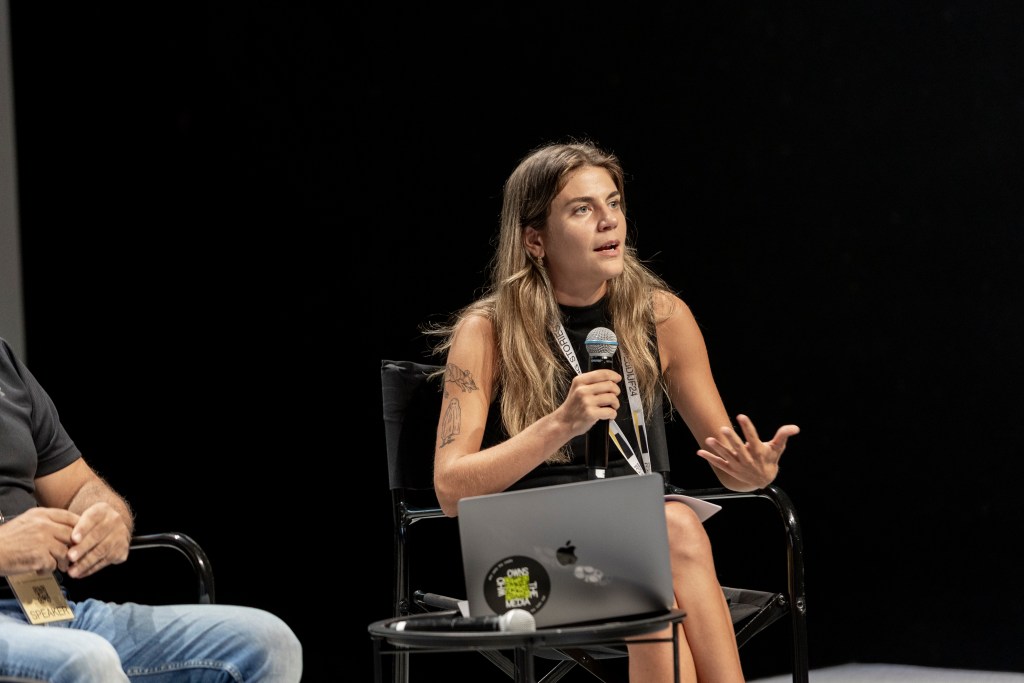
“We didn’t lose our focus, but it required a lot of energy and time which we wanted to direct to our journalism. At the time migration was the number one topic on the government’s agenda, which presumably is why they wanted to surveil people investigating issues around it.”
Protecting human life
Despite such challenges, Solomon has produced globally significant journalism, including its collaborative investigation with The Guardian, German broadcaster ARD and investigative NGO Forensis, into the deaths at sea of more than 600 men, women and children who were mostly from Pakistan, Egypt and Syria. They died in June 2023 when the fishing vessel Adriana that was carrying them sank in the Mediterranean while under Greek and European supervision.
“We revealed how the boat capsized and how the Greek Coast Guard was responsible for the deaths of these people,” says Papangeli.
The investigation found that the shipwreck happened as a result of actions taken by the Greek Coast Guard, and revealed inconsistencies in the Greek authorities official accounts. To uncover this, among other things, the team gathered more than 20 testimonies from survivors, analysed witness statements, deck logs, secured footage from nearby vessels, and created a 3D model of the vessel.
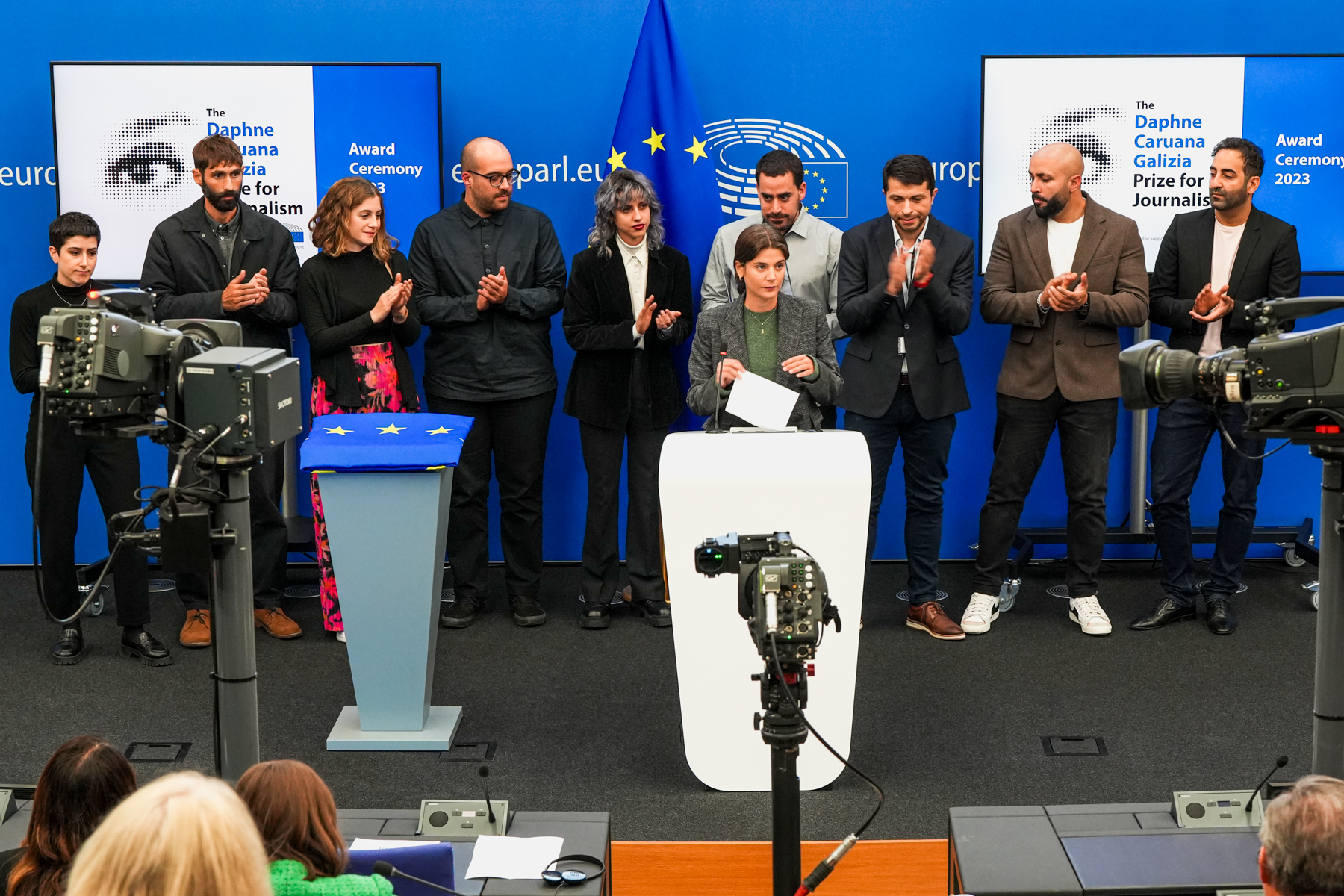
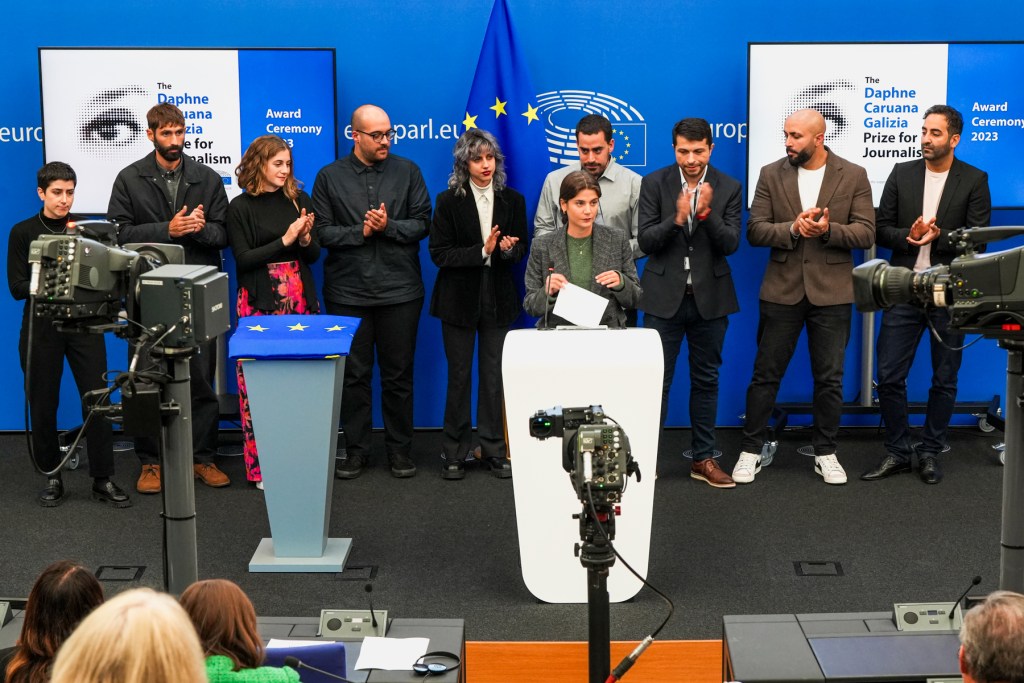
Their work was recognised when it was chosen ahead of more than 700 other entries as the 2003 winner of the Daphne Caruana Galizia Prize for Journalism, awarded annually for outstanding reporting in honour of the Maltese journalist and anti-corruption activist who was assassinated by a car bomb in 2017.
Accepting the award, Papangeli said:
“The fatal event has forced us to confront questions about so-called European values and where the EU really stands on protecting human life – regardless of passport, ethnicity, race, gender, disability, or class. This joint investigation showed how violent and restrictive EU migration policies are, ultimately leading to a massive loss of life.”
Papanegli and the rest of the Solomon team remain deeply committed to exposing injustices, corruption and the abuse of power – the hallmarks of true investigative journalism through the ages.
“Solomon’s work has gained recognition both in Greece and across Europe. And we’re really proud of the reputation we’ve built for fearless, high quality journalism,” she says.
“This year, we want to deepen our connection to our audience and maximise our journalism’s impact. Our aim, as always, is to bridge local stories to global contexts, by strengthening the cross-border collaborations we’ve built in recent years.”
To achieve this, Papangeli says, requires fostering a working environment in which people can flourish – offering fair salaries and training opportunities, while embedding mental health and well-being as the organisation’s core values.
“Unfortunately, we see unstable working conditions being normalised, even under the banner of independent or collaborative journalism, and we don’t want to let that happen at Solomon. We prioritise these things not only because they’re essential to the sustainability of Solomon but also because they are fundamental to the long-term health of independent journalism itself,” she says.