On Sunday April 12, Hungarian voters delivered “the most decisive democratic verdict in the country’s history”. They turned out in record numbers to conclusively end the 16-year rule of Viktor Orbán and Fidesz, handing Péter Magyar’s Tisza party a constitutional majority.
“In the first few days there was volcanic joy,” says Márta Pardavi, co-chair of Civitates’ alumni partner, the Budapest-based Hungarian Helsinki Committee. There was also a realisation among civil society – squeezed for years by Orbán’s government – of the daunting challenges that lie in wait, as well as questions over how society should reconcile with the recent past.
“What do you do as a society with this big change? Just look ahead to potential opportunities, or look back and try to understand what’s happened and what it means for people?” she asks.
“Lots of people experienced personal loss [during Orbán’s rule]. They lost jobs, reputations. Public assets have been corruptly stolen. How much time should we spend assessing the damage, and how do we deal with this on an individual level in a very polarised society?” The depth of this polarisation, and therefore the challenges in overcoming it, have been laid bare in different studies. “How can we create common space and purpose to end the divisions?” Pardavi asks.

The scale of damage inflicted on Hungary’s democracy over the last 16 years has been immense.
The European Parliament called the Orbán government a “hybrid regime of electoral autocracy”. Since 2011, when it passed a new constitution, it changed hundreds of laws – leading to Hungary becoming the world’s leading “autocratizer” in terms of the magnitude of change, according to the V-Dem Institute.
“Hungary was a liberal democracy in 2009, before Viktor Orbán and his anti-pluralist and Christian-nationalist Fidesz party came to power. Once in power, they initiated incremental rolling back of checks and balances in a textbook example of contemporary autocratization,” V-Dem reported in its 2025 Democracy Report.

Whirlwind
“A large part of Hungary was happy [with the result],” says Pardavi, “For our civil society network it was a big relief. There’s a big expectation that civil society will be able to operate in a freer space and engage domestically with policy makers, which we haven’t been able to for a very long time. We now have a chance to focus work on accountability rather than resistance.”
The first days after the election have been a “whirlwind”, she says.
“On an individual level we’re experiencing a sigh of relief, but also an awareness of how much we have to do. Lots of ideas and challenges have emerged. A big one is how can the [public’s] interest in politics and participation [evidenced by an electoral turnout of almost 80%] be sustained over a long period?”
“In the last two years, there’s been a tangible increase in support for civil society’s work and also for independent media, with people realising they provide very important safeguards against increasingly authoritarian governments.”
“Will people continue to see civil society as an important space for making sure the government does what it promised to deliver now the election’s over? It’s our job to make the case for ensuring they do.”
“There will be long, sleepless nights ahead,” says Pardavi, “but the commitment is there. We want to contribute to a very successful restoration process.”
New democratic dawn
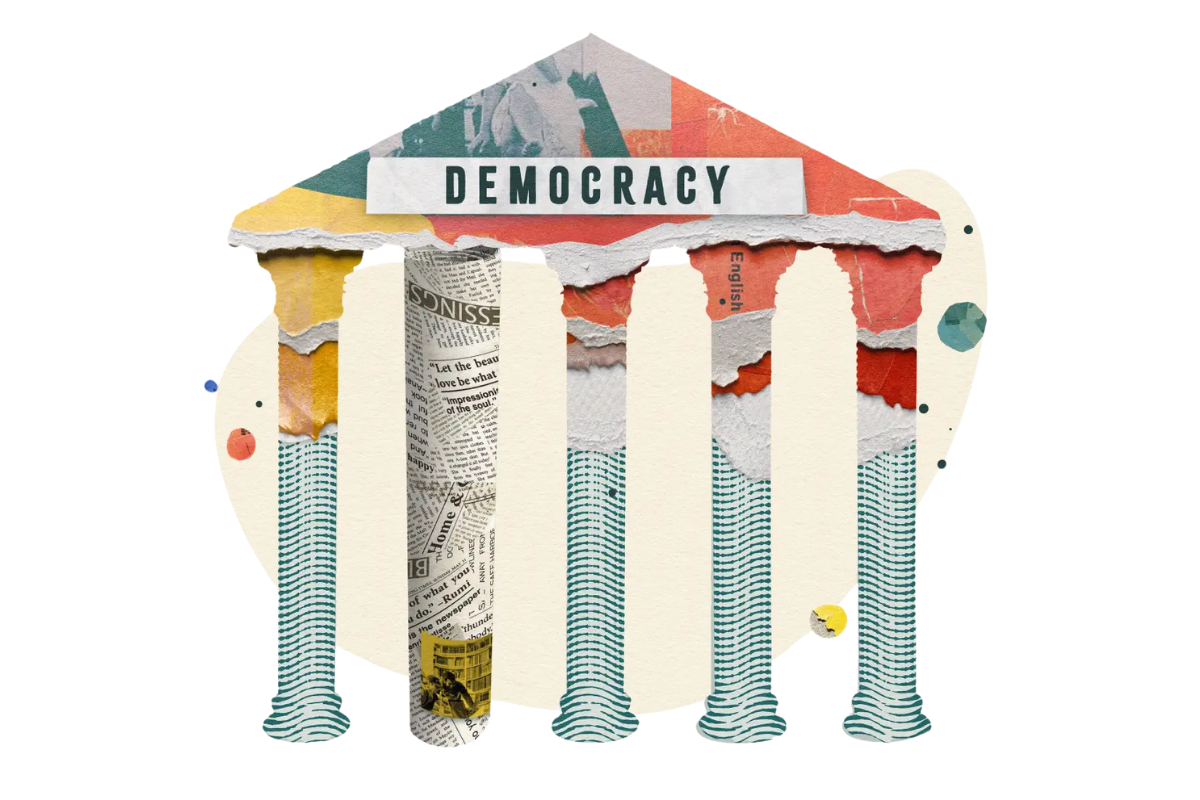
Pardavi – whose work over the past few years has focused on threats to the rule of law and civil society space – is under no illusions over the scale of the task involved in resurrecting Hungary’s democratic pillars.
“The biggest question is whether the new government will see civil society, independent media and academics as important and legitimate actors in a democratic society, and recognise that our work is in the public interest, or will there continue to be a closed door policy and no real engagement?
It’s not very obvious in the [new government’] statements so far that there will be a big switch in engaging with civil society, or that they will welcome our oversight. But we would like the trust and opportunity to show that it’s invaluable.”
Nevertheless, Pardavi says that Tisza’s super-majority means there’s a big opportunity to carry out legal reforms, including to Hungary’s constitution. A vital part of this work, she says, will entail “strengthening Hungary’s institutions and the rule of law culture in which they work”.
In time, the extent and nature of Hungary’s new democratic dawn will become clear.
What is certain though, is the commitment of the Hungarian Helsinki Committee and others in the country’s beleaguered civil society and independent media to grasp this golden opportunity. To do so effectively, they will need the continued support of funders in order to scale up their operations and respond to the pace of change.
“There will be long, sleepless nights ahead,” says Pardavi, “but the commitment is there. We want to contribute to a very successful democratic restoration process.”