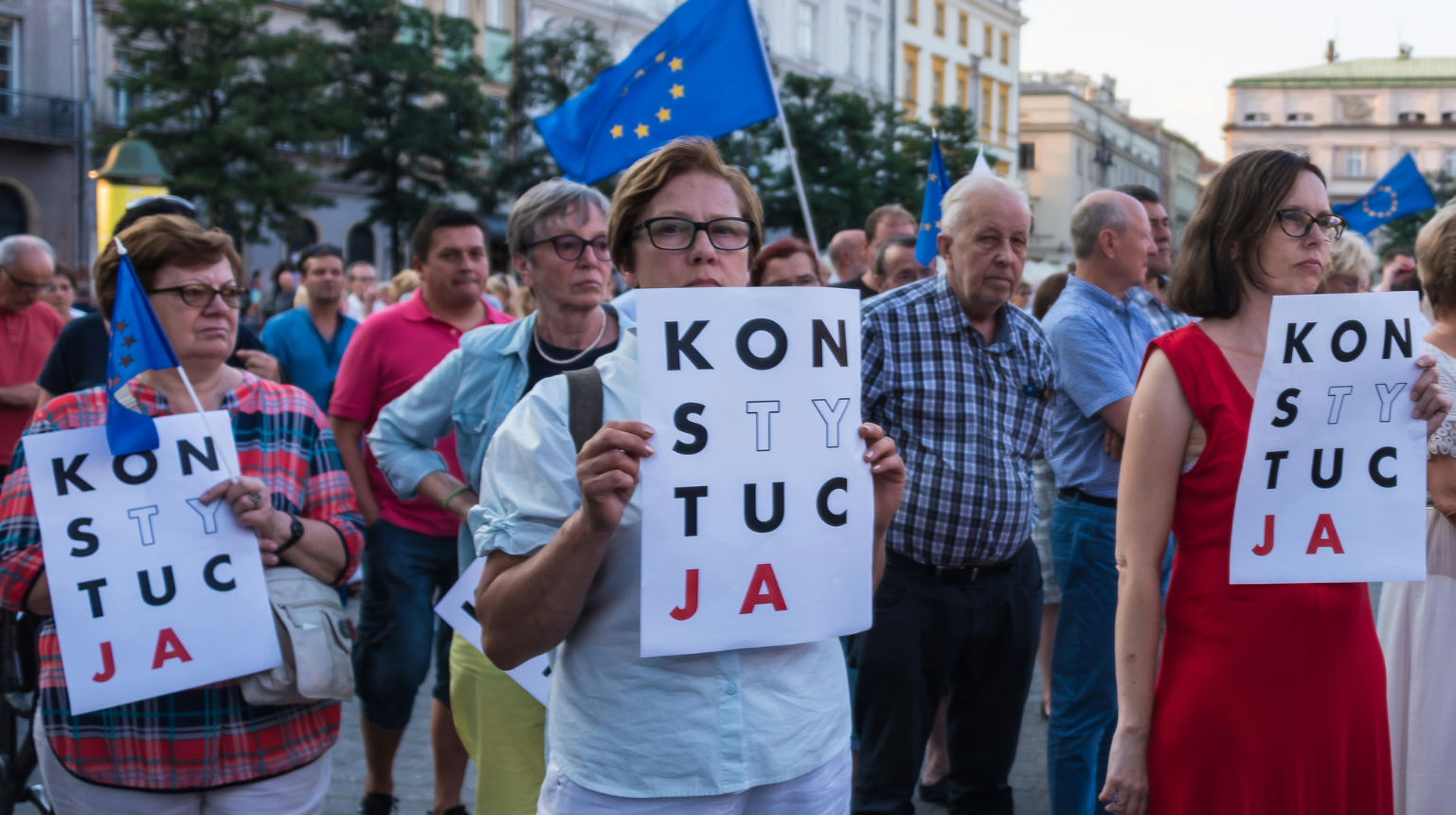
In 2025, the number of Central and Eastern Europe (CEE) countries ‘autocratising’ rose from eight to 11. Meanwhile the level of democracy for the average citizen in Western Europe was lower than at any time in half a century.
The trend, however, is not all one way: following Poland’s election in October 2023, there were widespread hopes for democratic renewal. Now, following the end of the 16-year rule of Viktor Orbán’s Fidesz party on 12 April, 2026, and the overwhelming victory of the Tisza party led by Péter Magyar, similar hopes are being raised there.
The voter turnout of 79.5% is Hungary’s highest since the fall of the Soviet Union. “This landslide victory is not just a change of government, but a historic rejection of the most entrenched political system in the European Union (EU),” said Chatham House’s Europe, Russia and Eurasia Director.
Restoring and resurrecting the pillars of democracy after years of damage presents formidable challenges.
But restoring and resurrecting the pillars of democracy after years of damage presents formidable challenges. All too often funders leave, reasoning that their job is done when authoritarian governments are supplanted by those perceived as more liberal. And governments who in opposition appeared open to dialogue with civil society, are suddenly less accessible once in power.
Civil society lessons
Although the situations are not entirely analogous, the experience of Poland’s civil society since the Law and Justice party was voted out of power in 2023, holds important lessons for their Hungarian counterparts.

Katarzyna Batko-Tołuć, co-founder of Civitates’ grantee partner, Watchdog Poland, recalls the wave of optimism in the aftermath of her country’s 2023 election: “There were huge expectations. The mood was very motivating.”
Unlike in Hungary, where the opposition did not engage with civil society before the election, in Poland they did – and this continued in the early days of the new government.
Batko-Tołuć said: “I remember in December 2023 we had an open meeting in the Ministry of Digitalisation, they allowed everybody to sign up and about a thousand people turned up, and they were very open to giving information. We had a Minister for Civil Society who established several working groups working on different issues important for civil society – not in terms of the rule of law or reforming of the institutions – but reforming the law connected to civic activism and NGOs.” Disappointment followed, however: “The problem was that they didn’t follow up on this, and there is no political interest in our work.”
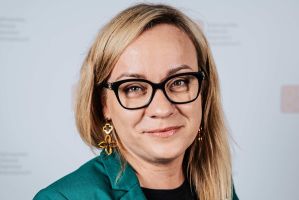
These sentiments are echoed by Karolina Dreszer, President of another Civitates’ grantee partner, the Board of the Polish Federation of Non-Governmental Organizations (OFOP), as well as her colleague Anna Grudzińska, OFOP’s European Advocacy Programme.
“There was a lot of hope after the election and among NGOs about rebuilding the country,” said Dreszer. “And there’s big disappointment because the opposition were very supportive of civil society before the election. But now they have a lot of things on the agenda they see as more important. There are some ministries and decision-makers who are more cooperative, but generally speaking, there’s still a lack of understanding of civil society’s role in protecting democracy. We’re trying to change this narrative, and we have to use this window of opportunity to prepare for the future, because we don’t know what will happen in the next election [in 2027].”
Grudzińska added: “There was a huge package of different bills that civil society prepared before the [2023] elections that they put forward to all the opposition parties. The majority have not been acted on. There are still many persistent issues when it comes to restoring the rule of law in Poland, and we are far from solving them. This is why these matters require constant monitoring and vigilance on the part of civil society.”
Civil society actors have remained visible across multiple forums, including special working groups with the Secretary of State. While there is disappointment that many proposals have yet to translate into concrete legislation, some progress has been made. New communication channels have opened that did not exist under the previous government, and a special parliamentary commission on cooperation with NGOs is also operating, where civil society representatives strive to maintain an active presence. Working in coalition, they have achieved some modest successes. Adopted reforms that have advanced through parliamentary commissions include faster and simpler registration procedures for civil society organizations, the removal of costly audit requirements for public benefit organizations, and changes supporting members of NGO boards who serve in voluntary roles.
Marta Krzynówek of Citizens Network Watchdog Poland discuses the challenges of working with the new government in Poland – one which now contains many former colleagues.
Democracy is a verb not a noun
A significant difference in the political landscapes in Poland and Hungary, is that in the former, the Law and Justice party remained the most popular party in terms of votes after the election, and the country is run by a broad political coalition. In Hungary though, the opposition won a landslide in essentially a two-party contest.
This does not necessarily mean that Hungary’s new government will create an enabling environment for civil society and independent media, but it does mean it will not face the same difficulties Poland’s government has in pushing through its legislative agenda.
We will face a huge amount of work to rebuild democracy in the legal framework, in institutions and in the hearts of the people

Many in Hungary, including our grantee partner Civil College Foundation (CCF), prepared diligently throughout 2025 for various post-election scenarios.
“We ran a campaign for clean elections as part of the ACT Coalition (with aHang, CKA, and TASZ), touring the country and supporting local groups and citizens with training and legal tools. We [also] did planning sessions and workshops assessing the probability of the different scenarios from the election and its potential consequences,” said CCF’s Gáspár Bendegúz Tikasz.
Speaking on the eve of the election, Tikasz noted: “If the opposition wins with a majority, there’s a big window of opportunity for us to push our agenda. But this will be the same country the next morning [after the election], so we will face a huge amount of work to rebuild democracy in the legal framework, in institutions and in the hearts of the people… In the last 16 years civic space in Hungary shrank in many ways.”
In the immediate aftermath of the election, as jubilant scenes played out in Budapest following the end of Orbán’s long reign, Tikasz said: “The elections were just the first step, the real work begins now. Civic control and the free press are still very needed as no political party has ever had such a strong political mandate in Hungary.”
The paths towards redemocratisation in Poland and Hungary may present different challenges, but they share two things: the election of a new government is no time for funders to step back from supporting civil society and independent media, and democracy remains an active, ongoing process in need of constant vigilance. Or to put in another way, “democracy is a verb not a noun”.
This article is part of Civitates Annual Report 2025, which will be published in May 2026. To discover more stories like this one, stay in touch by signing up for our newsletter or follow us on LinkedIn.