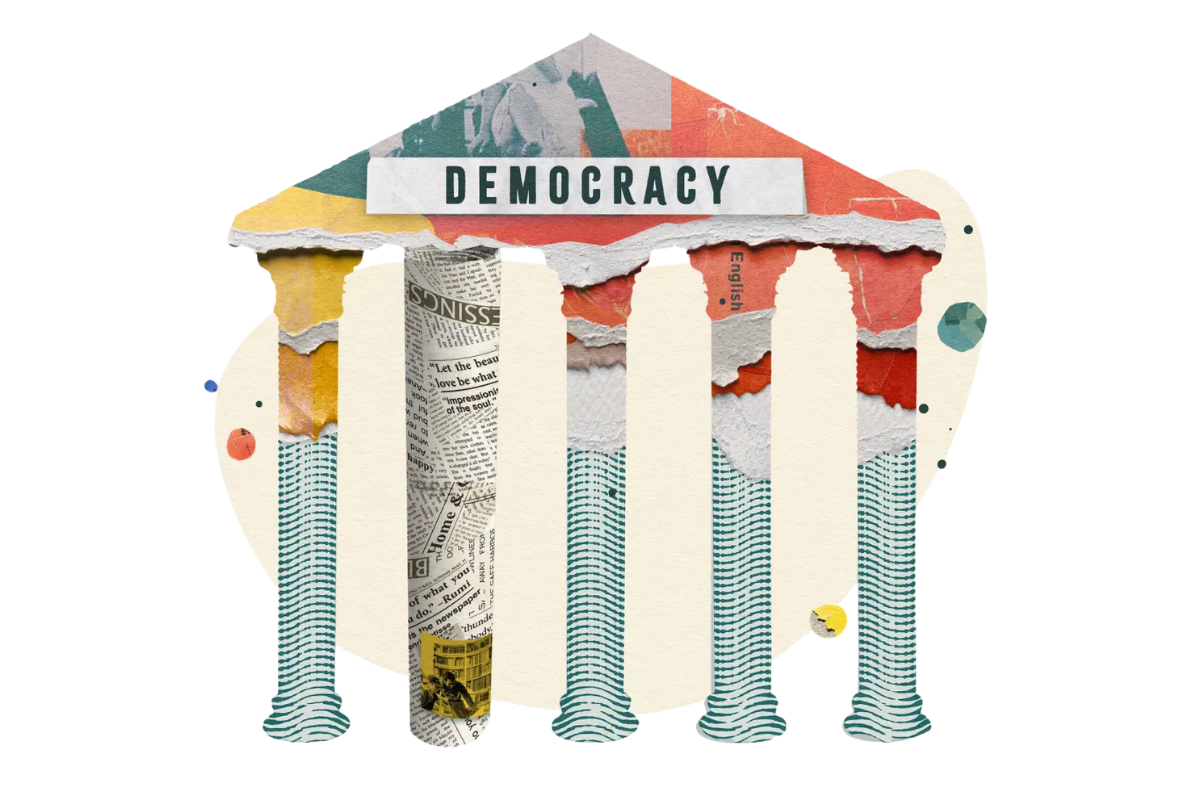
These are turbulent times for European democracy.
Deepening economic anxiety, recent extreme weather events, the dizzying pace of technological change and geopolitical instability are all fuelling discontent and societal fracture: shaking peoples’ faith in democracy and the institutions that uphold it.
Civil society, independent media and digital rights organisations working to arrest this democratic decline, find themselves on an endless treadmill: tackling immediate threats, with little time to step back and reflect on the bigger picture.
Of course, defending democratic institutions in the here and now is essential. But we need to look beyond the present and prepare in a bold and coordinated way for the uncertainties ahead.
To this end, we’re proud to launch the The Time to Act is now: Future of Democracy in Europe report – the result of a year-long foresight process led by Civitates – which explores several plausible futures for democracy in Europe and outlines concrete recommendations for both civil society and donors to make better decisions today.
The main takeaway is that repair alone will not be enough. Representative democracy still does real work, but it has never delivered for everyone, and it is not keeping up. We have to defend what works and build what does not yet exist.
So how do we do this?
Democratic renewal
Three central messages emerge in the report.
The first is that democracy needs a story that people can believe in, and funders and civil society need a clear and compelling vision of the democracy we want to build.
This vision should be rooted in listening to the public, including young people, understanding their concerns and acknowledging where liberal democracy has failed.
As one interviewee put it: “No state or constituency is born democratic. You become it. And as long as we are questioning it, struggling for it, trying to live it in different ways, to reinvent it, it’s alive.”
The second key message is that we need to be prepared to do things differently.
This means moving from reacting to events to anticipating them, and building resilience before events occur not after. We need to experiment with new approaches and learn from failure.
Since no organisation or sector can meet these challenges alone, civil society and funders need deeper collaboration, broader coalitions and to engage with unfamiliar allies. They also need to share power, risks and decision-making.
The third main message is that the future is not predetermined: it begins now.
Foresight can help civil society and funders prepare for several possible futures, anticipate change and make stronger decisions now. The choices we make today about relationships, capacity, security and infrastructure will determine what democratic defenders can protect, renew and build in the future.
Call to action
The report also offers a shared, interconnected agenda for action for civil society and philanthropy.
We need to develop a compelling, hopeful vision of democracy, acknowledging where the current model hasn’t delivered. We must rebuild relationships with the public and connect democracy with everyday issues such as housing, jobs, security and the cost of living. We need to extend the boundaries of who we collaborate with, building coalitions across sectors, and national borders with shared concrete goals.
Crucially, we also need to share power, risks and decision-making.
For funders, this means long-term core support for democratic actors and a willingness to back bold experiments. For civil society, it means planning ahead, investing in resilience and focusing on impact.
European democracy is at a cross-roads, with several possible paths ahead. We must prepare for them through foresight, security planning and investment in alternative civic infrastructure.
A critical conversation
Civitates will consider the report’s recommendations at its upcoming General Assembly meeting in November, and it will inform our strategic refresh, to be rolled out in 2027.
This report nevertheless does not claim to have all the answers for the growing crisis facing democracy in Europe. Rather than a set of fixed prescriptions, we see it as part of a critical conversation about what kind of democracy people need, and how civil society and philanthropy can help build it. The latter should be active participants in this conversation, not passive observers.
We also see this report and our ongoing foresight work as enabling Civitates to become a more agile donor. We encourage you to download the report, consider what it means for your work and join the #DemocracyFutures conversation.
Democracy’s future is not preordained. Collectively, we have the power to help shape it.