On October 10, 2026, the disquieting news broke that the Irish Presidency of the Council of the European Union proposed cutting almost a third of future EU financial support for culture, media and civil society. This decrease was confirmed on November 21 by António Costa, President of the European Council.
It marked the latest twist in the protracted, complex negotiations over the EU’s long-term budget, the Multiannual Financial Framework (MFF), and specifically AgoraEU, the new flagship programme for democracy, civil society, media and culture.
Starting in January 2028, the MFF will total almost €2 trillion spending over the following seven years. Under the Irish Presidency’s proposal, AgoraEU’s budget would drop from €8.6 billion to about €6 billion.
This represents a saving of only around 0.2% of the total budget – yet it would profoundly impact Europe’s ability to fight disinformation, and to protect democracy, independent media and culture, according to those at the forefront of this work.
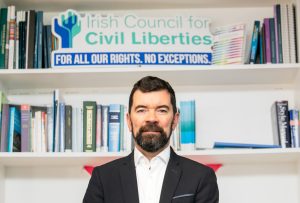
Among them is Joe O’Brien, Executive Director of the Irish Council for Civil Liberties (ICCL). O’Brien points out that while the proposed cut to AgoraEU represents little savings for the overall MFF budget, its impact on democracy would be disproportionate. He says that it would affect “the things that connect ordinary people and communities with the system that many of them are disenchanted with; a system that in many respects hasn’t served them well.”
Far from irreversible
The ICCL is part of Civitates’ Future of Europe cohort, which brings together organisations working across media, culture and civic space to strengthen coordinated advocacy for AgoraEU, and to make the case for sustained investment in democracy.
In the wake of the Irish announcement, the cohort sent an open letter (supported by almost 900 organisations) to the European Council, calling on Member States “to recognise AgoraEU as critical infrastructure for Europe’s collective future”.
Yet as disappointing as the proposal is, it’s far from irreversible. Everything is still to play for, says O’Brien:
“I think our argument is gaining traction. France and Spain have come out in support. We need to work on other Member States. Having worked in government, my experience of these negotiating processes is that they go down to the wire.”
That wire, however, is drawing closer.
EU Council leaders will gather on November 26 and then again on December 17 and 18 to discuss the MFF with the aim to agree on the size of the EU budget before key elections in France, Italy and Poland next year. The trilogue between the Parliament, the Council and Commission to negotiate the details of the programme, namely priorities, governance, etc., is expected to start in Spring 2027. Final approval of AgoraEU is expected by summer of 2027 to allow the Commission to open calls for proposals in early 2028.
It’s important for the cohort to be visible and audible from now to the very end – down to the last day, the last hour, and the last minute. We have to find ways of making ourselves visible and audible to the key people, because we’re battling against lobby groups that are bigger, more well-resourced, and louder. We have to be strategic in terms of who we point at and how much resources we put into it.
This message is echoed by Mark Scott, a digital policy expert whose work for the cohort is hosted by Civitates’ partner Maldita.

“I think [the Irish proposal] is a starting position, a negotiating tactic. Frugal countries are looking to cut-back and civil society is an easy target,” says Scott, who is also Principal Strategic Advisor at Christchurch Call Foundation, which works to eliminate terrorist and violent extremist content online while upholding human rights.
Scott notes that while the EU Parliament’s position on the budget is closer to civil society’s, the budget will be set by the Member States and the Council – and with funding for defence and agriculture deemed ‘untouchable’, the Council is “looking for ways to reduce what some perceive as money not well spent. Unfortunately civil society is in the crosshairs”.
This is a false dichotomy, he suggests.
Europe is increasingly exposed to hostile outside forces, including electoral interference through the digital sphere, and the EU explicitly relies on civil society to help provide the evidence to enforce its ambitious digital regulations, including fact-checking, election monitoring and defending citizens’ fundamental rights.
There’s a significant juxtaposition between Europe investing heavily in semi-conductors and other strategic technologies, and it not being willing to spend a tenth of that money on democratic accountability. A lot of people talk about supporting the digital sphere within the budget and it has not happened.
He cites research he jointly conducted while Senior Resident Fellow at the Atlantic Council’s Democracy and Tech Initiative. It showed that in 2024 (the last year for which figures are available), independent organisations doing vital work around tech, democracy, and information integrity were overwhelmingly financed from outside EU institutional funds, with the US government and US philanthropic sources providing approximately 56%, while EU national governments supplied only 14%.
“If Europe wants to sit at the table alongside China and the US and support the rule of law in the digital sphere, it needs to put its money where its mouth is. This is not about hand outs: there’s a strong business case for why money invested in digital civil society has huge returns,” Scott says. (8.9 million people in the EU work in cultural employment, including journalism.)
Every bit of support counts
The MFF’s legislative acts will be adopted in 2027 after the conclusion of two different sets of negotiations: one determining the overall budget, the other on the AgoraEU (deciding on funding priorities, governance, etc). In the days and months ahead the cohort will continue mobilising at national and EU level to ensure that its message is heard.
Gaja Šavelė, member of the European Economic and Social Committee, Head of Strategic Programs and Advocacy at the NGO Coalition for Lithuania, a national member organisation of the European Civic Forum (ECF), says the importance of AgoraEU funding cannot be underestimated.

“In Lithuania [which will assume the Presidency of the Council of the EU in January], the budget for our NGO fund has not changed in the last four years. That means with inflation and prices rises the NGO sector is already getting less money. We tried various ways to get our message across, especially to the EU, because it’s our biggest concern,” Šavelė says.
Matteo Vespa, Policy and Project Officer at Civil Society Europe (CSE), which brings together 29 European platforms and CSO members, says they have been doing all they can “to ensure that civil society funding and support is mainstreamed across the programmes, and that operating grants and advocacy are still eligible activities, as well as ensuring that we have an MFF that is big enough to cover all the new priorities.”
To this end CSE will continue “reaching out to frugal countries and stakeholders at the national level, and mobilising civil society to ensure that we have a strong EU budget.”
“We’ve also been doing a lot of capacity building with other cohort members, including organising webinars with EU level and national organisations about AgoraEU,” Vespa explains.

Philanthropy’s critical role
Vespa, along with the other interviewees for this article, says that in the coming months philanthropy can play a crucial role in determining AgoraEU outcome.
Joe O’Brien says that greater philanthropic support will enable civil society to get their message through to high-level decision-makers at critical moments:
“It gives us the ability to make sure we’re in their thought processes when they’re making those final decisions, making those final calls, be it at three or four in the morning. The way to do that is to be persistently out there, but also by targeting the right people, because we have to be strategic. We need philanthropy support to do that.”
Our job is to show how AgoraEU can ultimately protect democracy and make our societies more cohesive: places where people feel that they belong, where they have trust in institutions, and ultimately societies that are fairer.
There is still time to convince those who hold AgoraEU’s fate in their hands of this compelling argument, but it is closing fast.